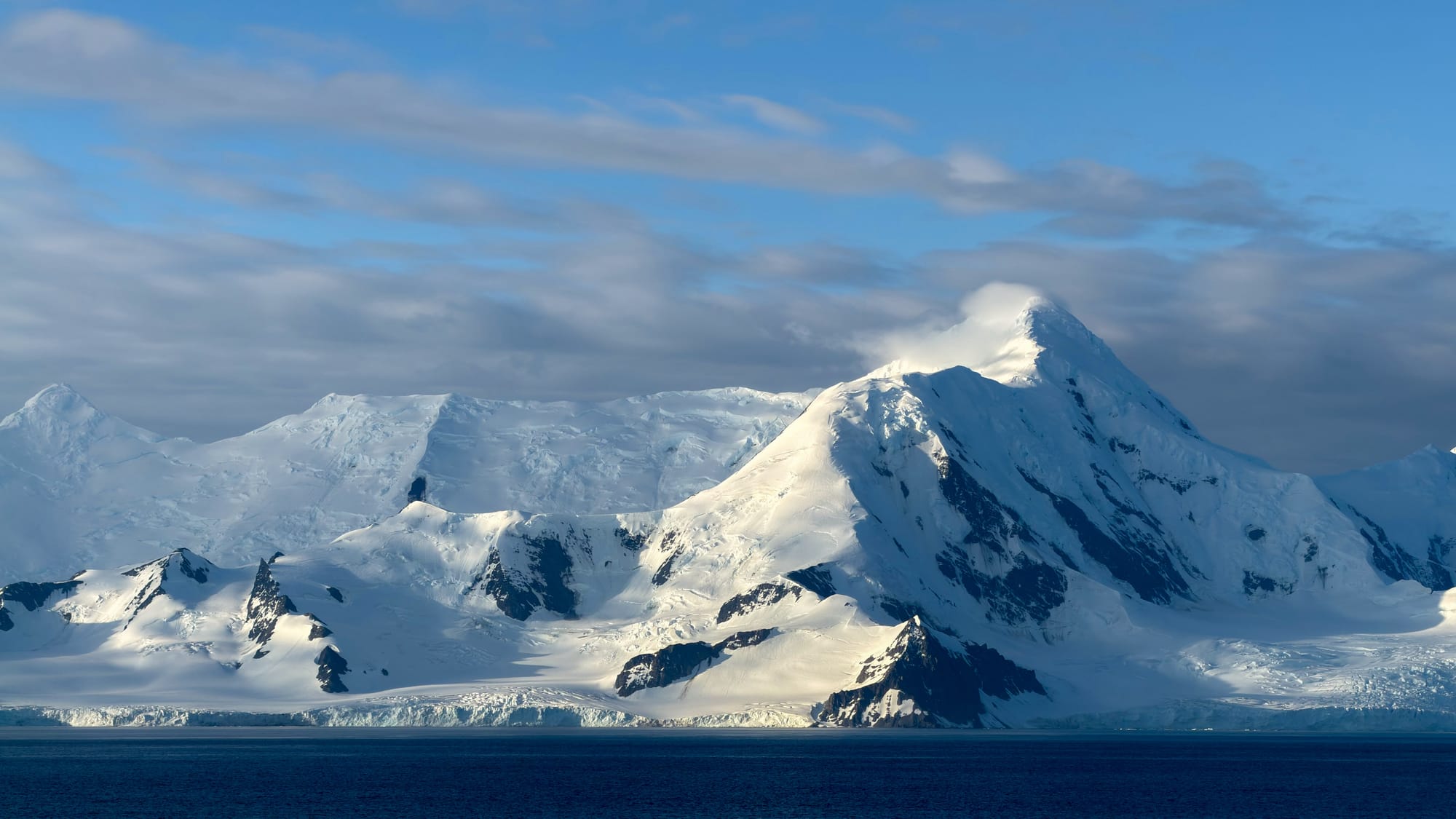

For the small number of travelers who make it this far south, Antarctica often marks their seventh continent. For us, it became our sixth, leaving only Australia to complete the set. We chose to experience it aboard the Silver Wind, a Silversea vessel purpose-built for polar exploration and well suited for the demands of Antarctica.
Reaching Antarctica is a time-intensive commitment, so to make the journey fit our schedule, we opted to fly directly to King George Island on the Antarctic Peninsula. By doing so, we bypassed the two-day crossing of the Drake Passage, trading open-ocean endurance for a more efficient—and still unforgettable—route to the White Continent.
The Drake Passage is famously choppy and sailing through it is often an exhilarating adventure. It’s the convergence of oceans and temperatures that makes this region so lively, with cyclones that form in the warm Pacific sweeping into the passage below the cape.
Our trip began with us flying down to Santiago, Chile. Not a year ago, we were here in Santiago starting our trip to Patagonia in search of Pumas. This time we would be staying at the Ritz-Carlton for the night, which was arranged by Silversea.
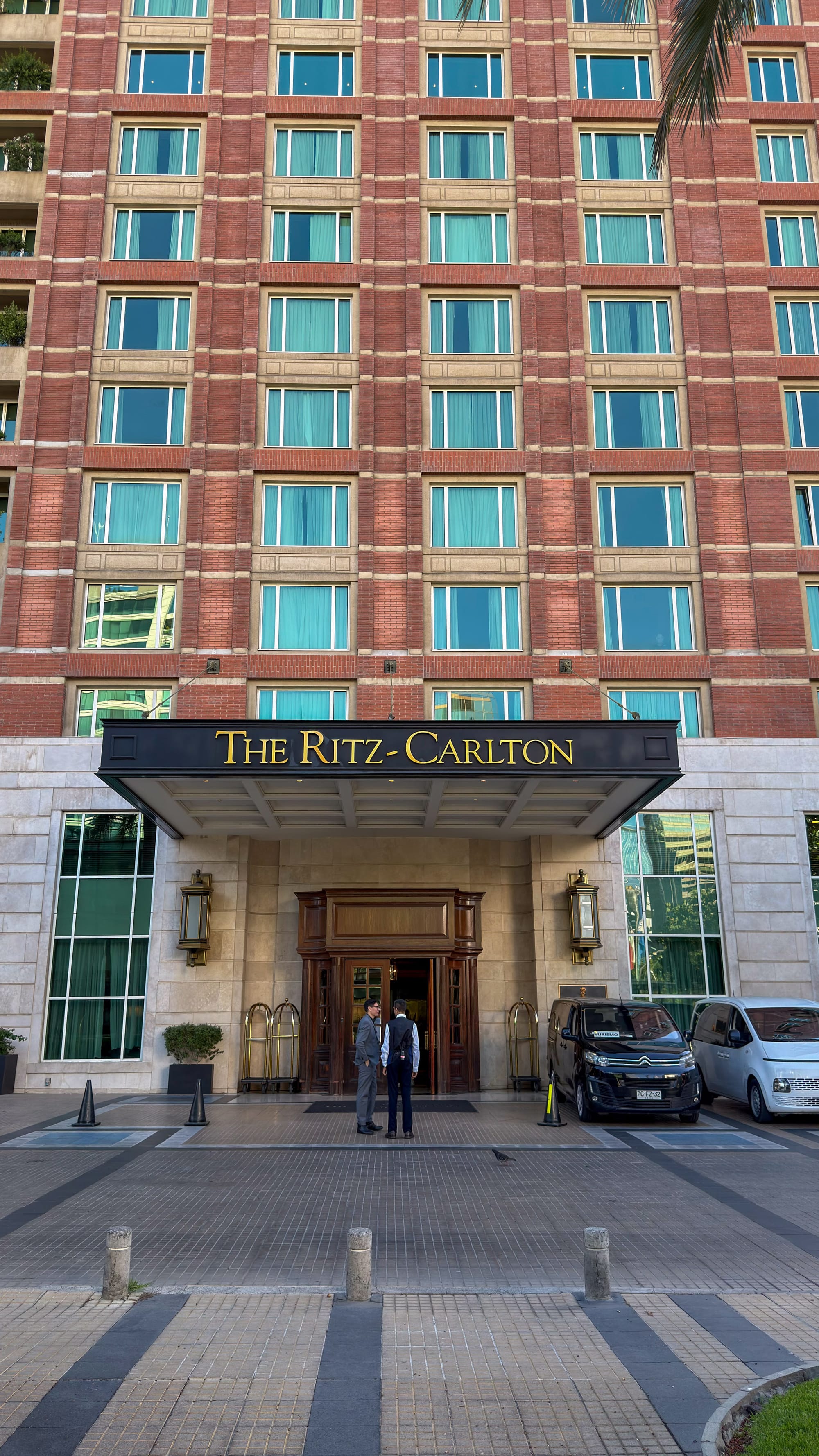
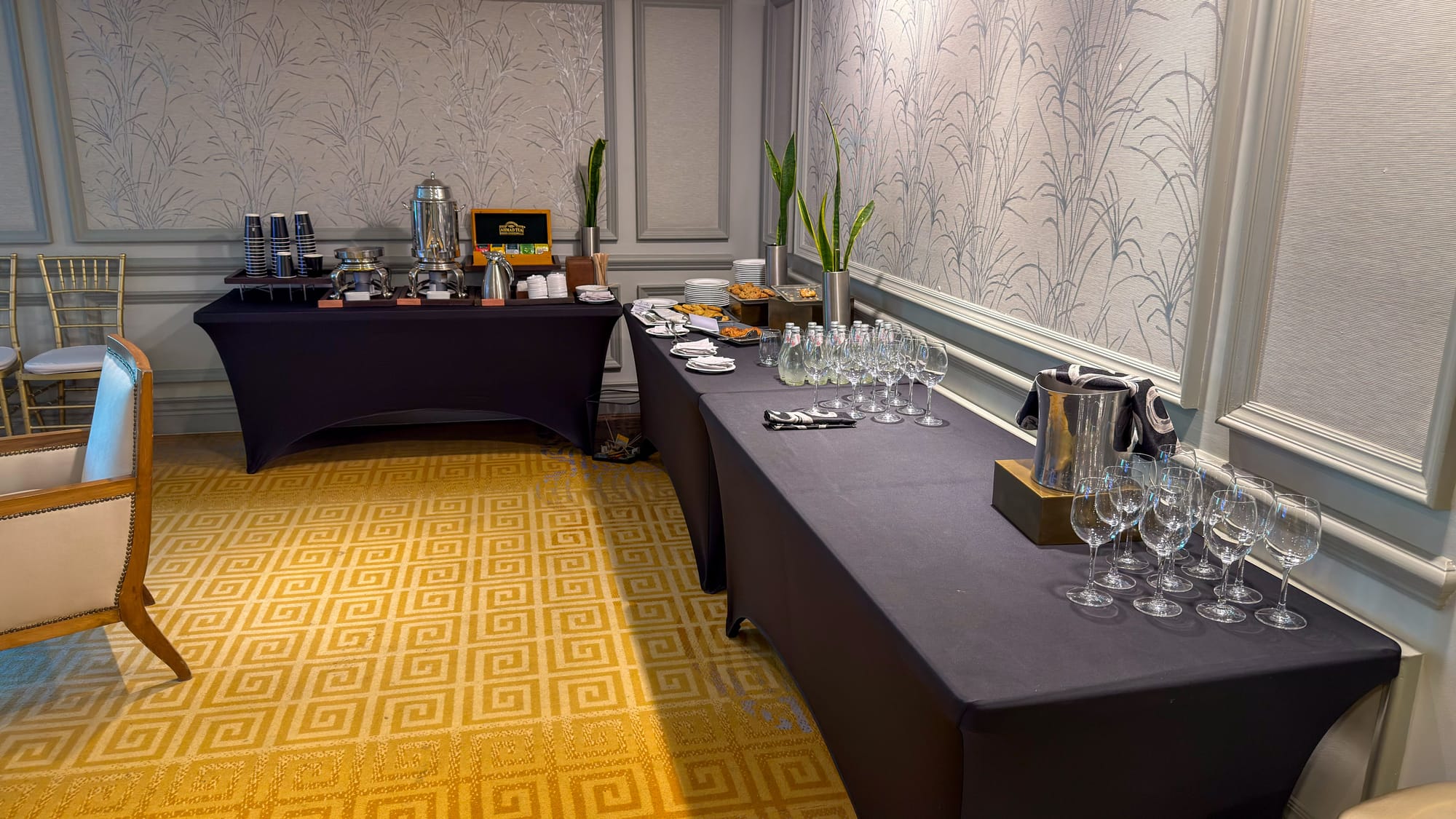
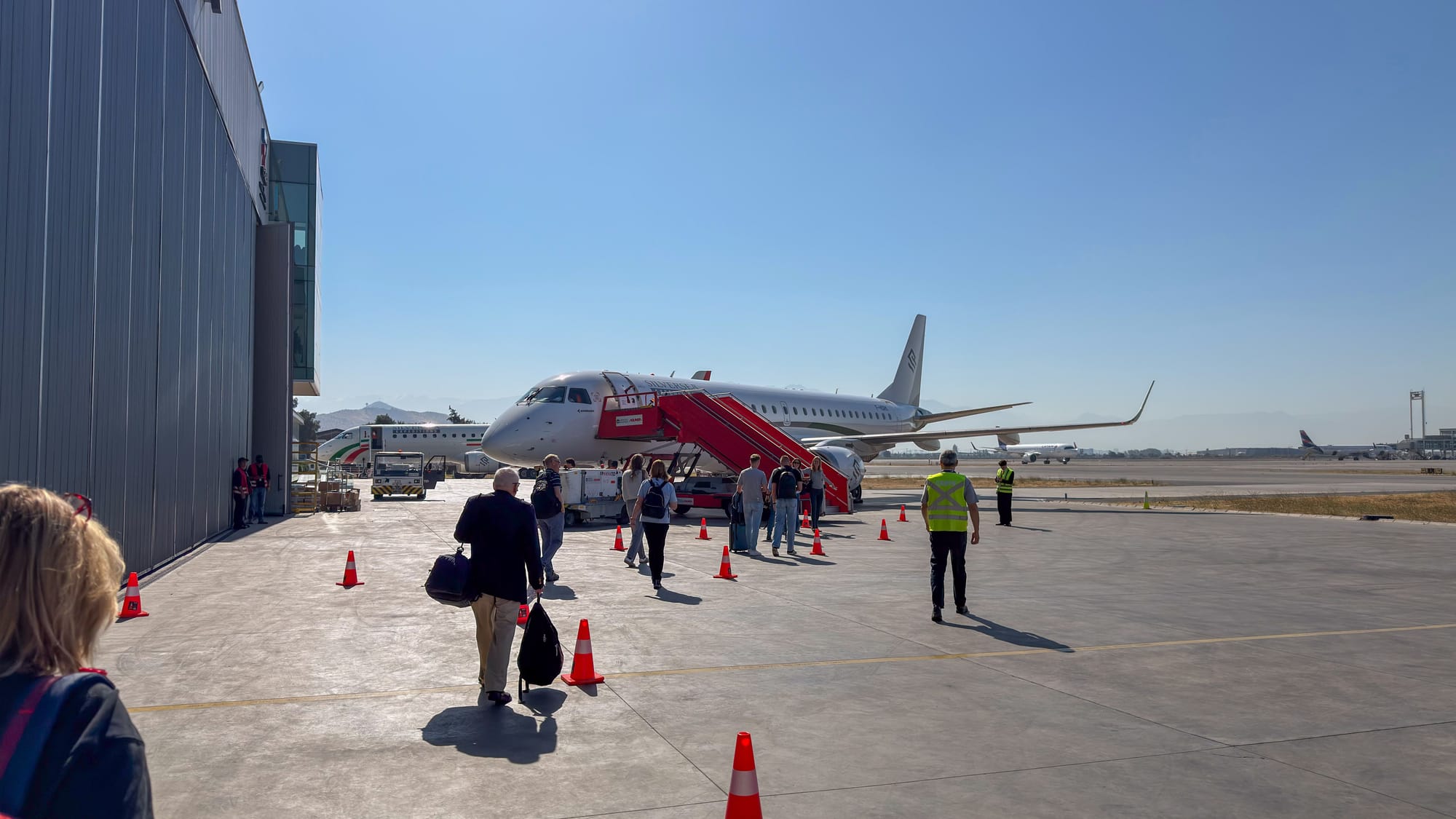
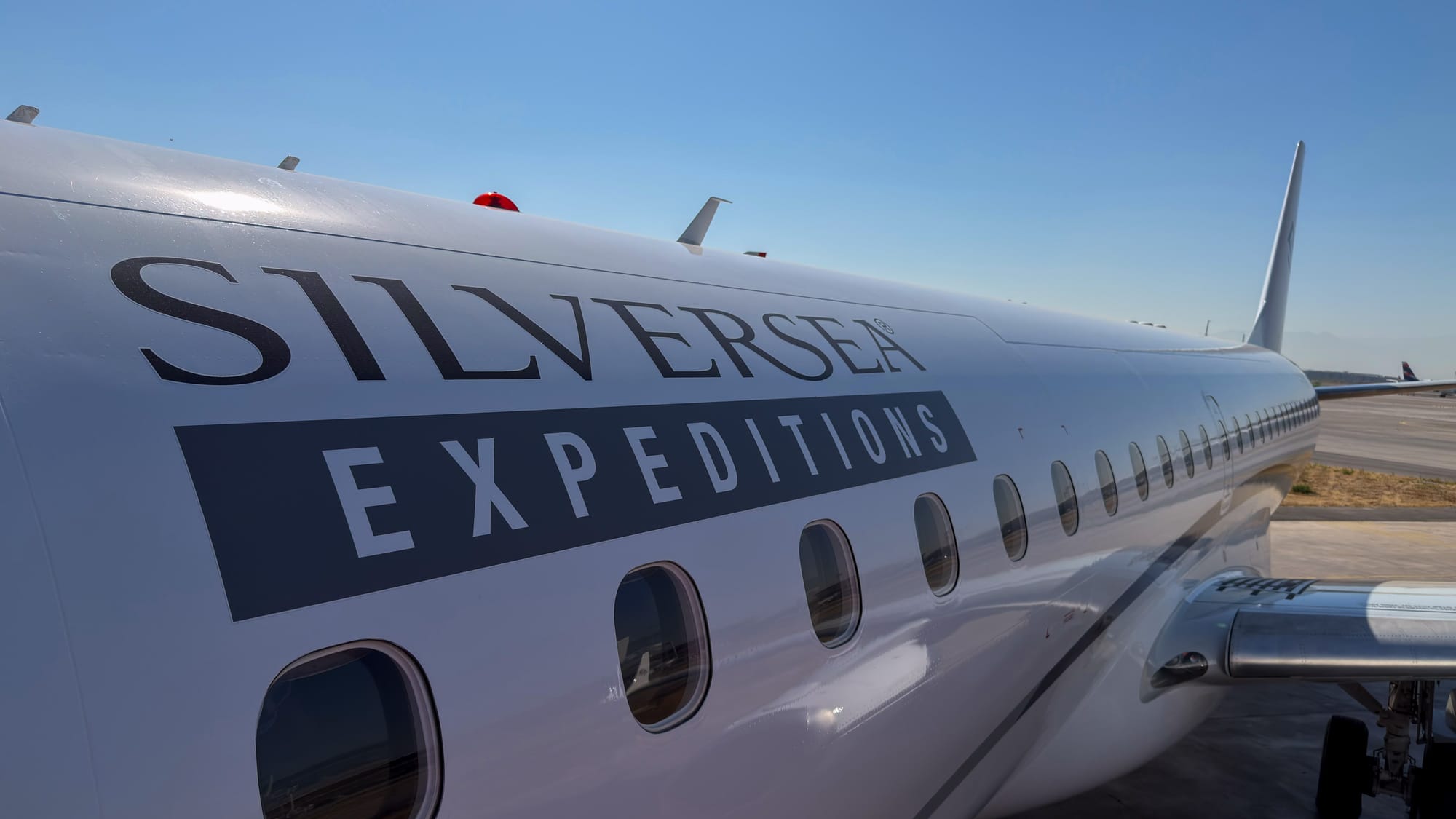
This is where we met the Silversea team to receive our flight details and full itinerary for the expedition. Silversea operates its own aircraft, flying us first from Santiago to Punta Arenas, Chile, and then onward to King George Island on the Antarctic Peninsula. While we waited for our hotel room to be ready, Silversea hosted a reception with food and drinks—our first small hint that this journey would be meticulously handled from start to finish.
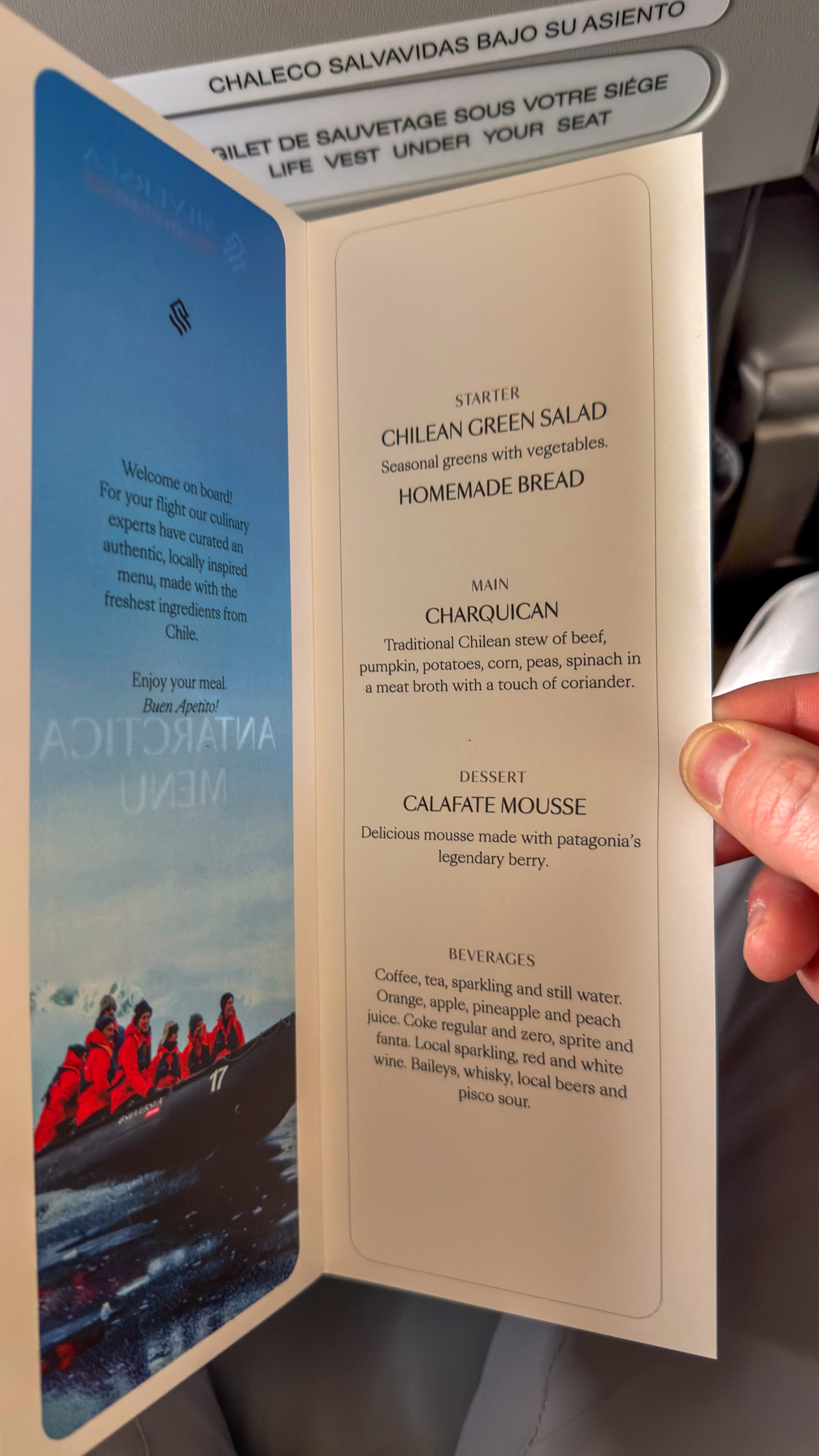
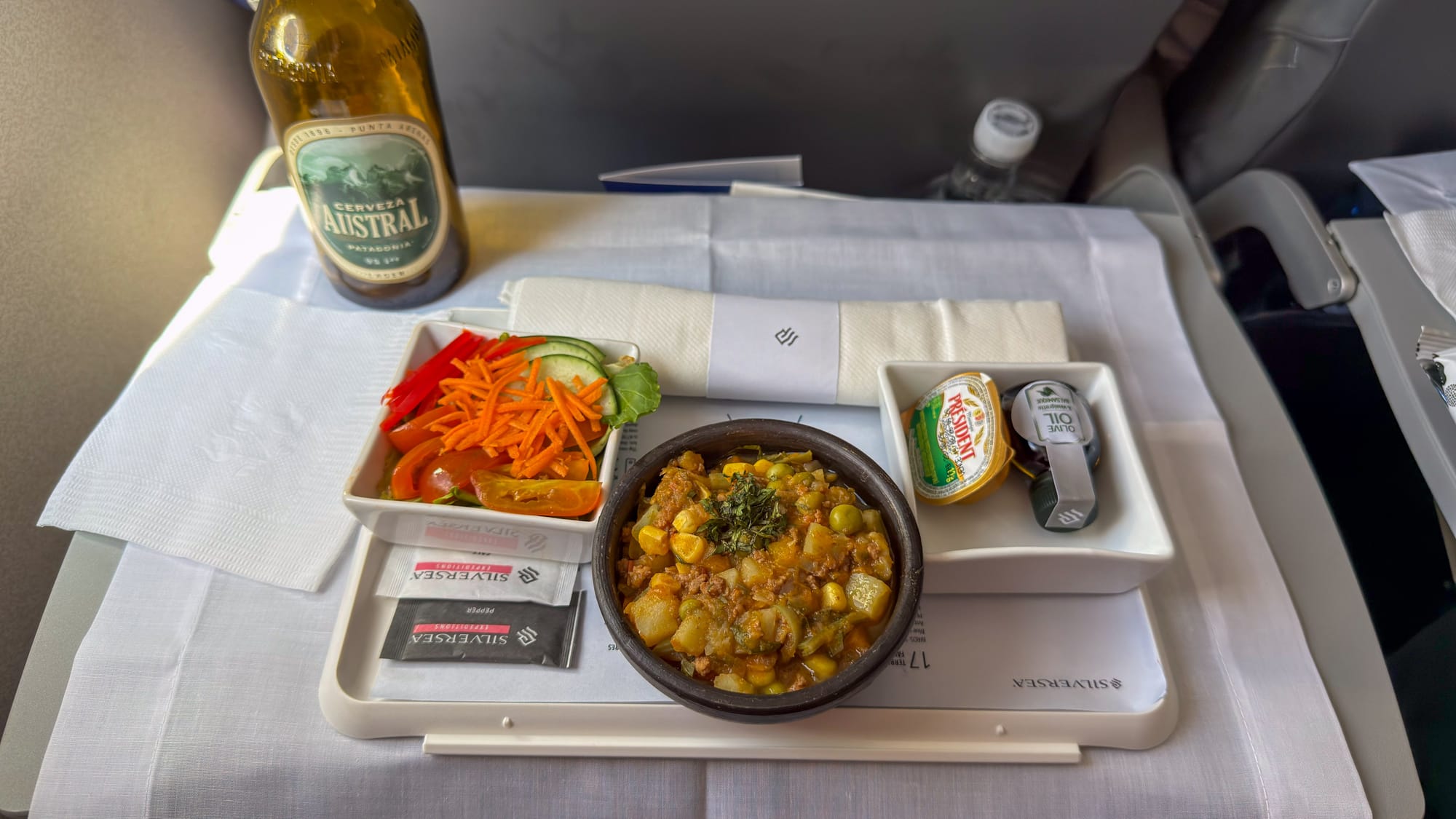
According to our itinerary, we would be on the first bus at 9am which would take us to the airport for our first flight to Punta Arenas. It was about a 3.5 hour flight. During the flight, a traditional Chilean meal was served. The main dish was Charquican which is a traditional Chilean stew of beef, pumpkin, potatoes, corn, peas, spinach in a meat broth.
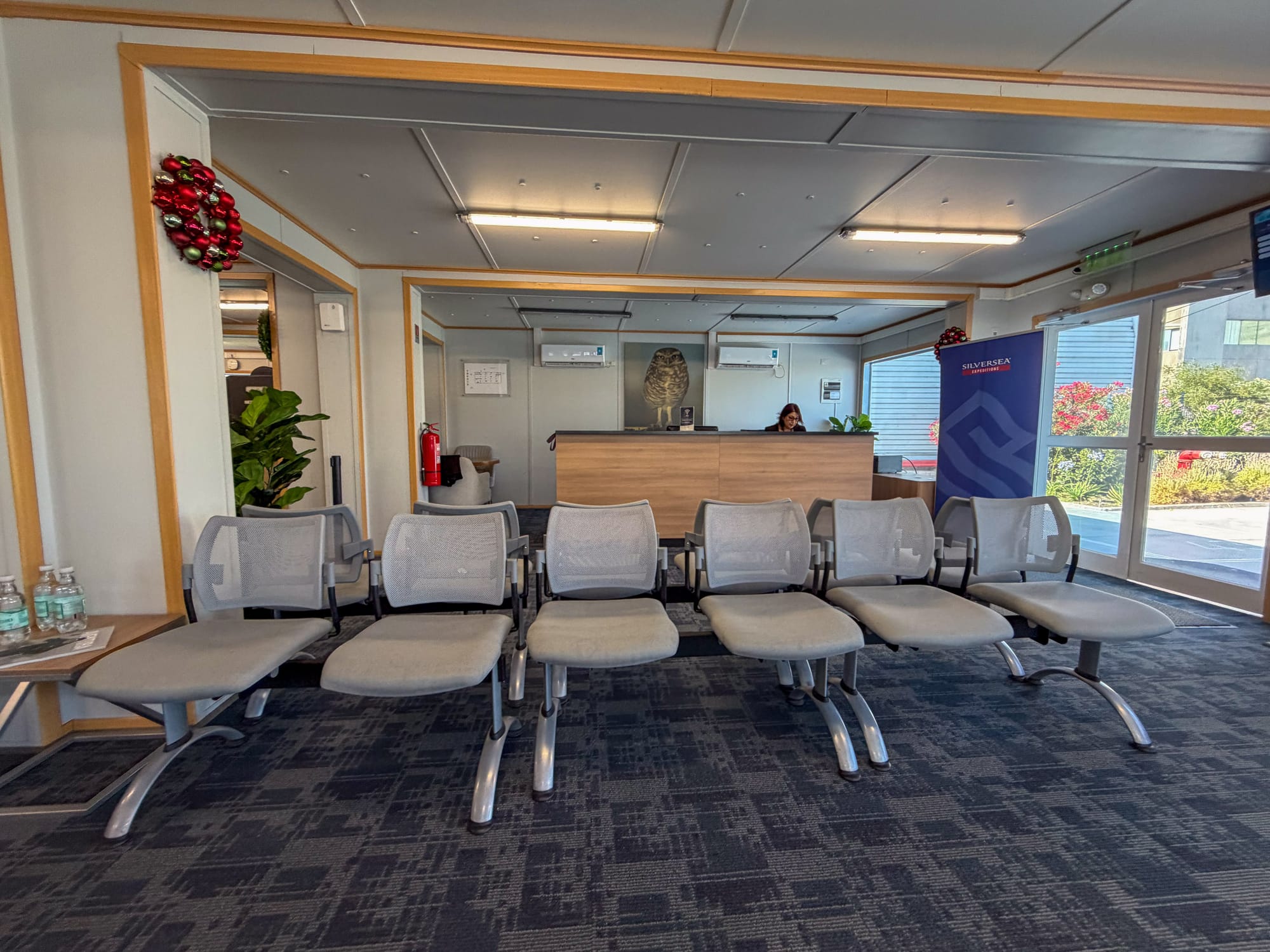
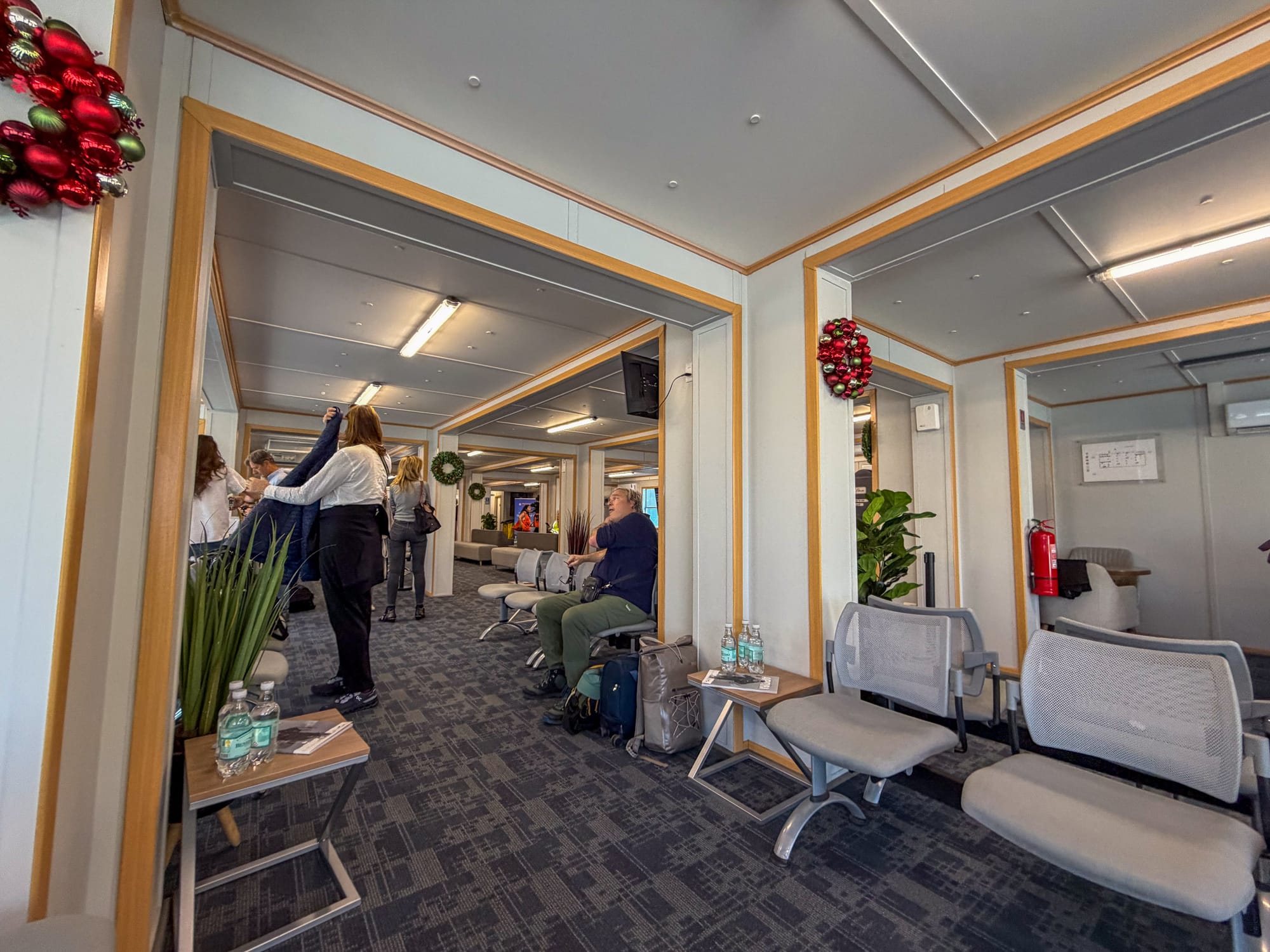
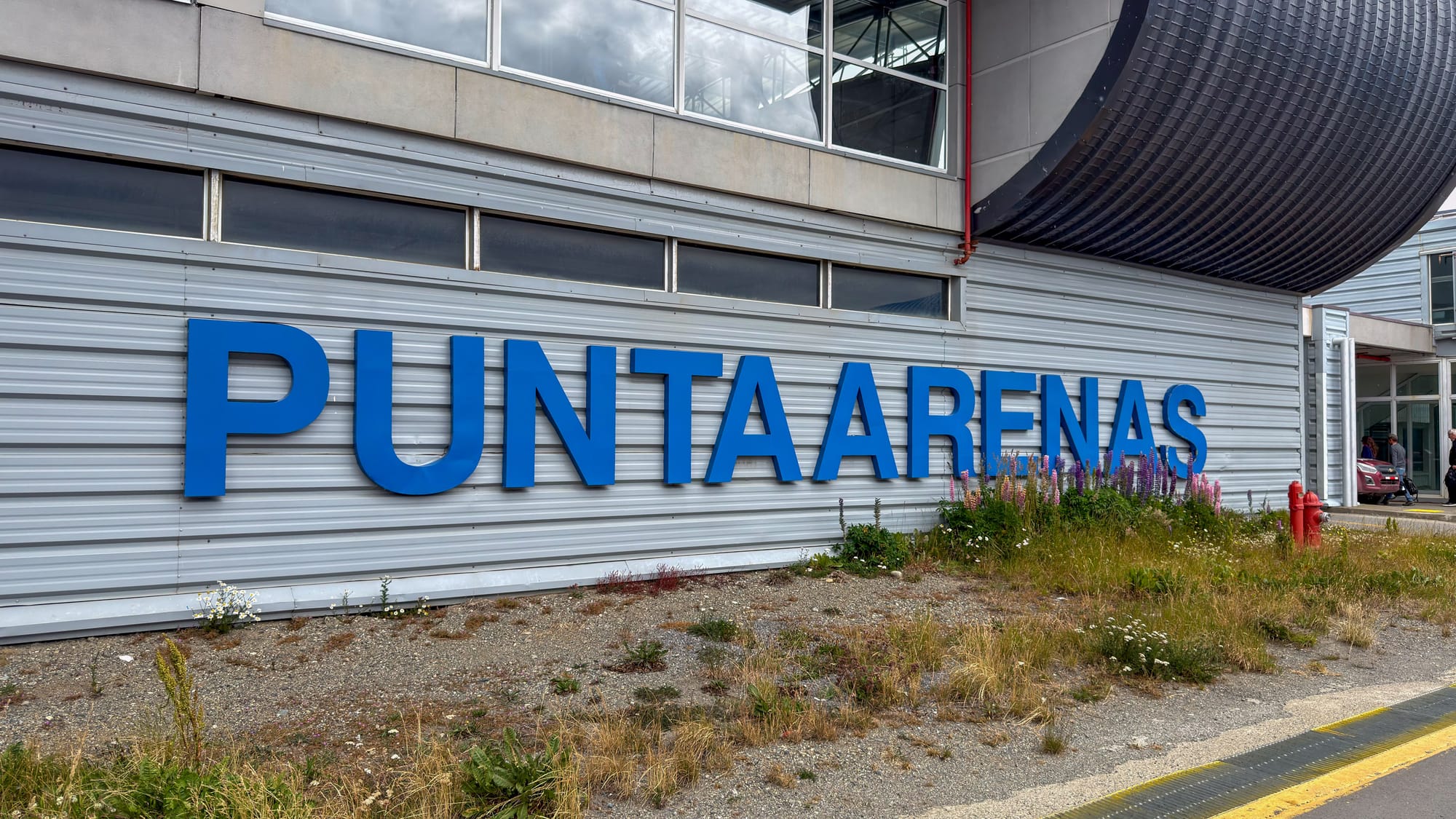
Upon landing, we boarded another bus which took us to our hotel for the night.
When we arrived to Hotel Cabo de Hornos, our room was ready immediately—and it came with a few welcome surprises. Silversea outfits every guest with essential expedition gear, including a parka, rain pants, boots, backpack, and water bottle, all of which were waiting for us in the room. Even better, the parka, pants and backpack were ours to keep, a practical souvenir from the journey south.
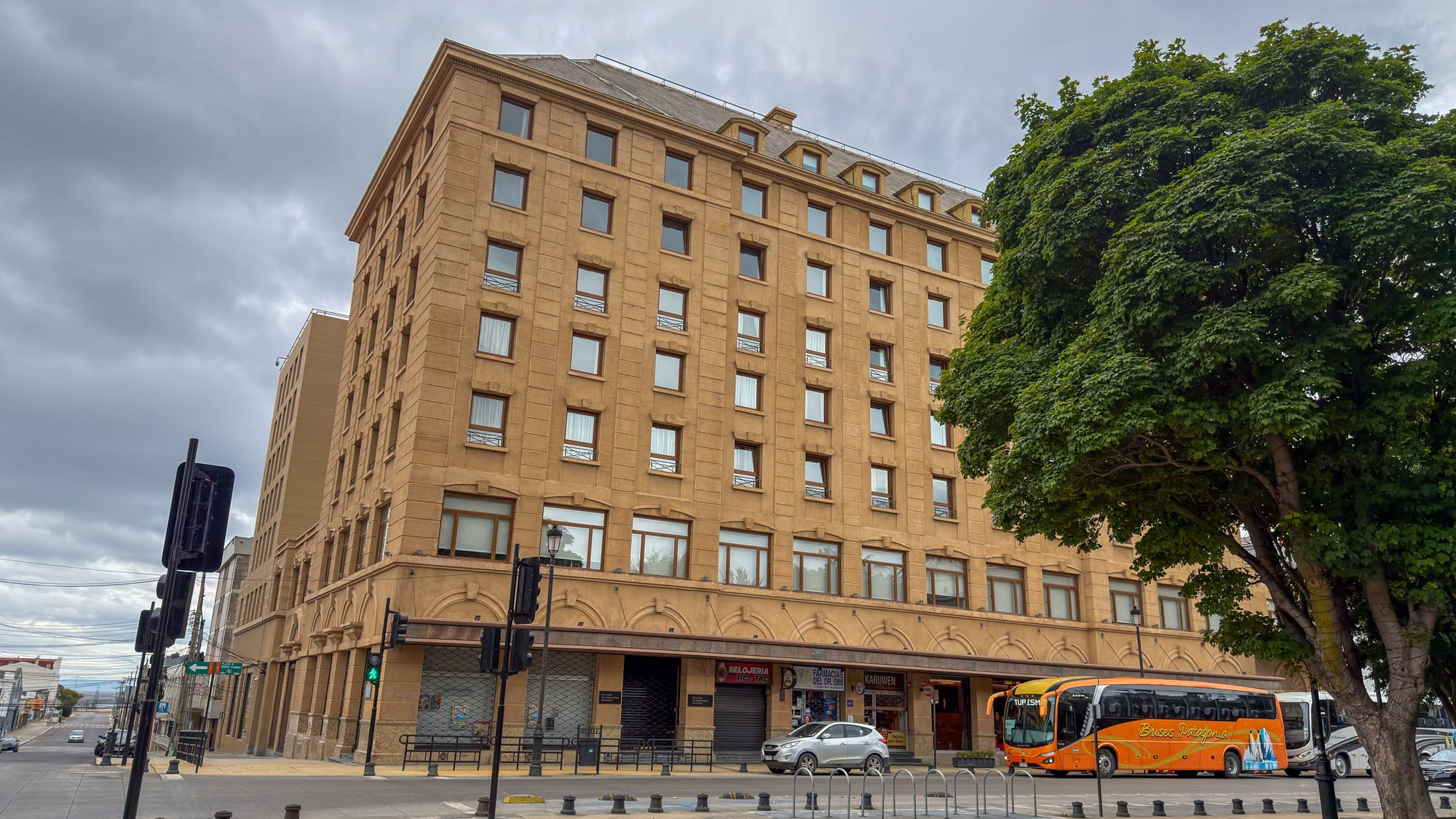
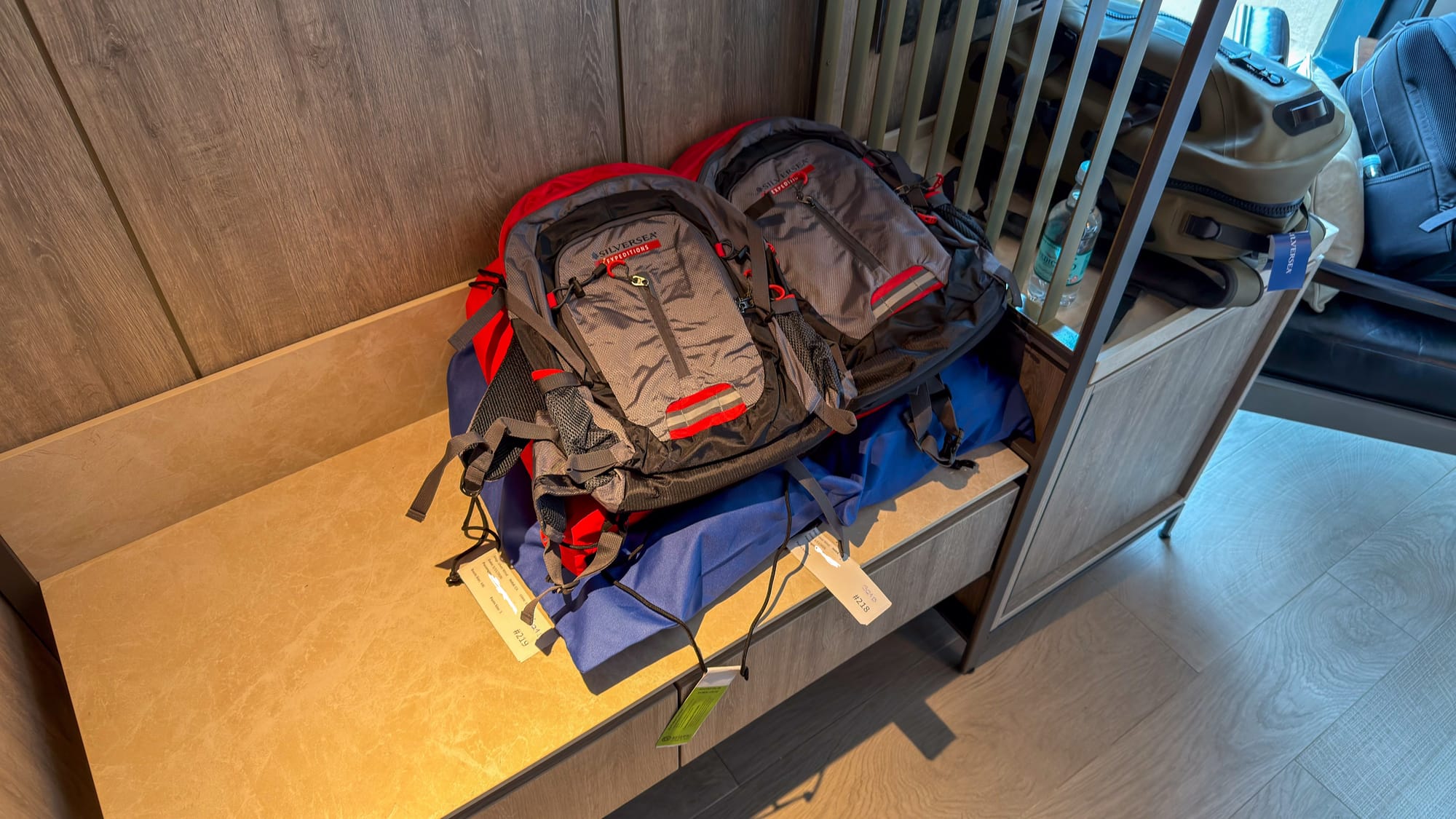
Hotel Cabo de Hornos
The hotel also had a dedicated fitting room stocked with a full range of jacket and boot sizes to make sure everyone was properly equipped. My boots turned out to be a size too large, but swapping them out on the spot was quick and painless—one less thing to worry about before heading to Antarctica.
Before the expedition could truly begin, some of our gear had to pass through biosecurity, where it was thoroughly cleaned to ensure nothing foreign would be introduced to Antarctica. That evening, Silversea hosted a buffet dinner at the hotel—a welcome meal, though everyone’s attention was really on the pending weather report scheduled for 8:00 p.m., which would determine whether our charter flights south would operate. Exhausted from the journey, we were eager to get our flight times and collapse into bed.
Unfortunately, the weather update arrived about an hour and a half late, an uncomfortable reminder of how unpredictable conditions can be and how easily flights can be canceled. When the email finally came through, the relief was immediate—we had a confirmed departure. Our flight was scheduled for 6:00 a.m., the first of three heading to Antarctica. That meant a 3:30 a.m. wake-up, just enough time for a quick bite before boarding the bus to the airport and hoping the weather continued to cooperate.
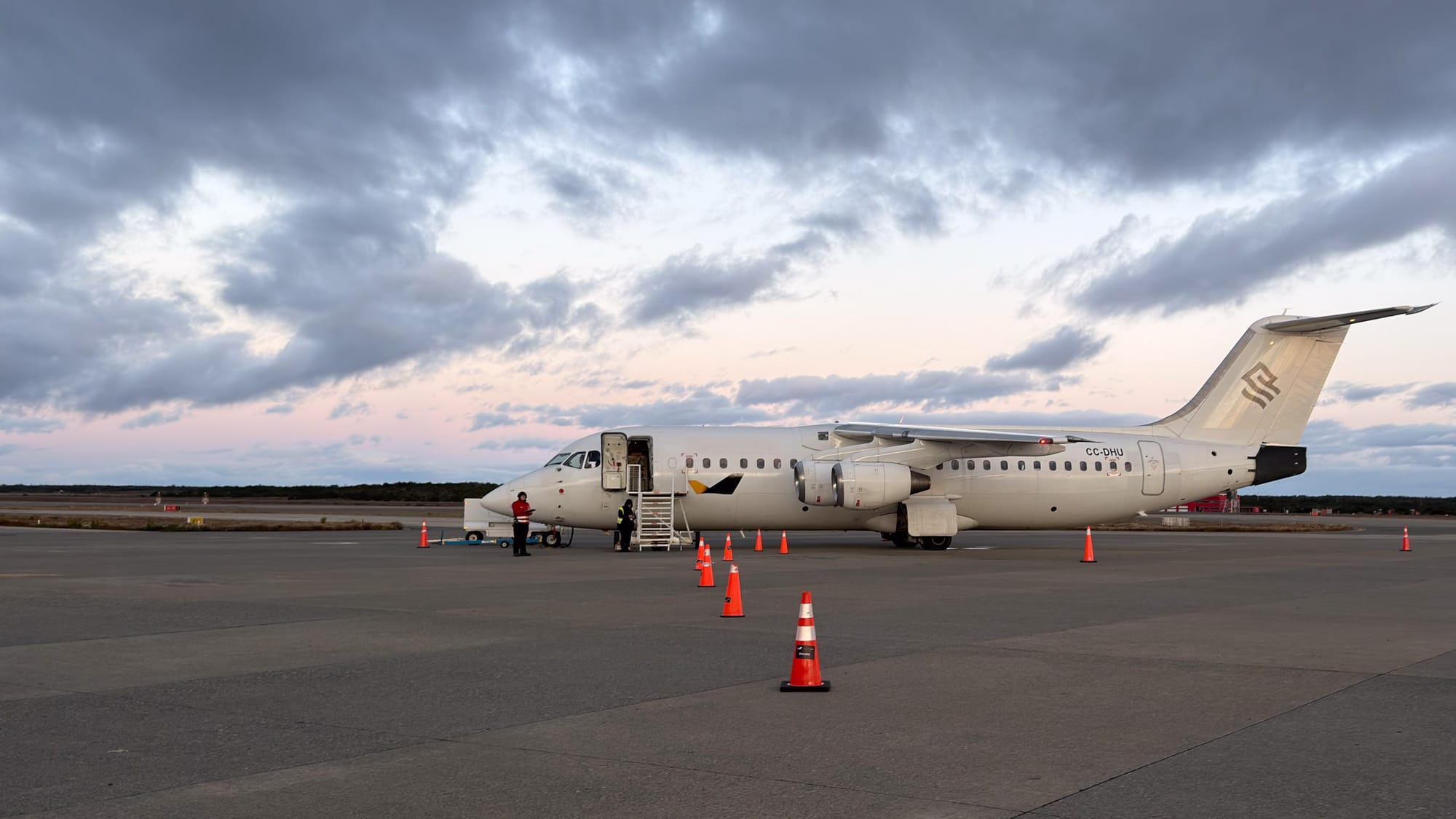
Our flight departed right on schedule, and roughly two hours later we were touching down in Antarctica. Because the airstrip doubles as a working research facility, wandering around to take photos wasn’t allowed, so the transition was swift and purposeful. Moments after stepping off the plane, we were ushered onto a bus and driven straight to the shoreline.
From there, we climbed into a Zodiac for the 15-minute ride out to the Silver Wind. Even before setting foot on the ship, Antarctica made its presence known—our first small iceberg drifted past us en route, a quiet preview of what lay ahead.
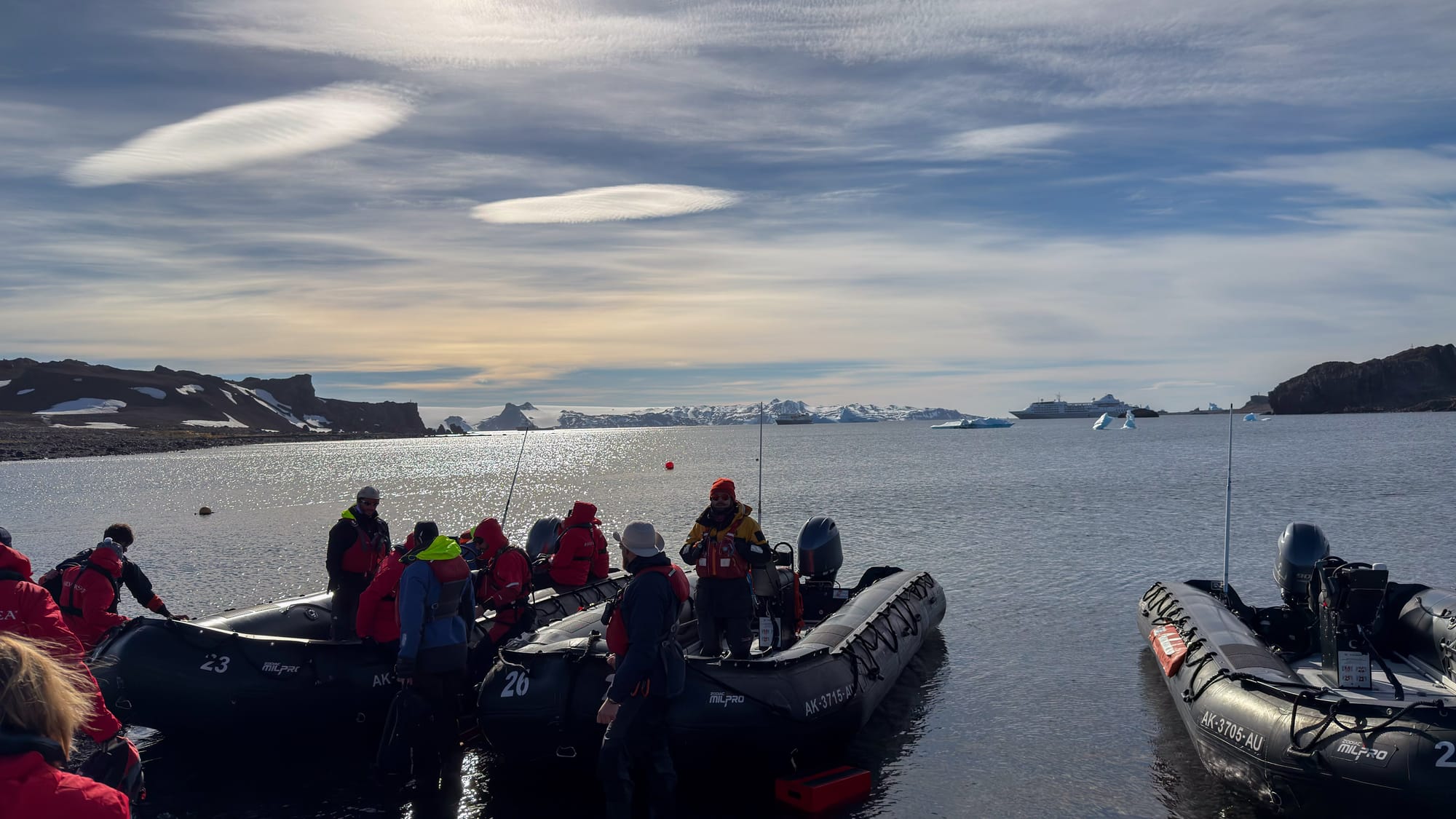
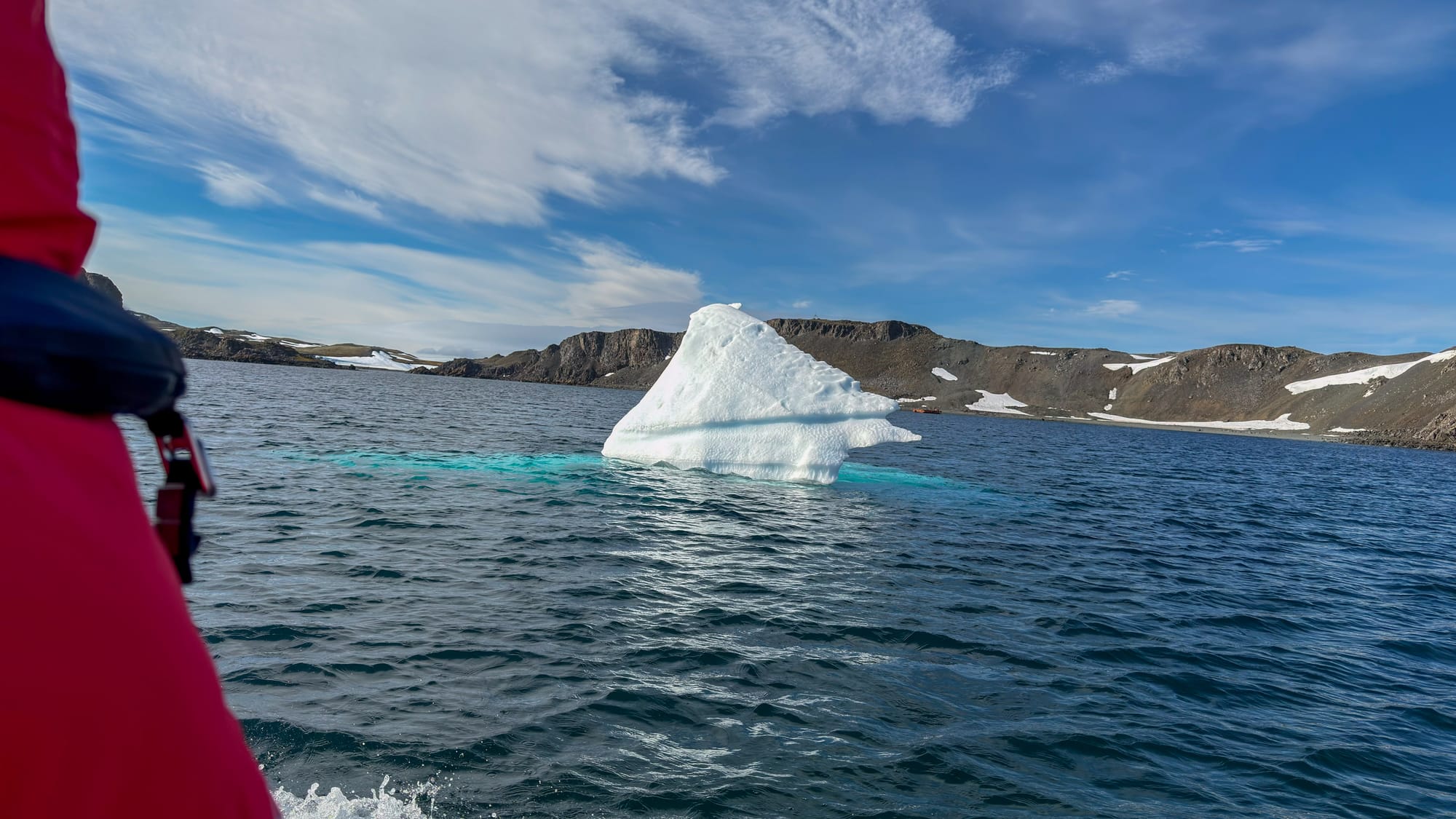
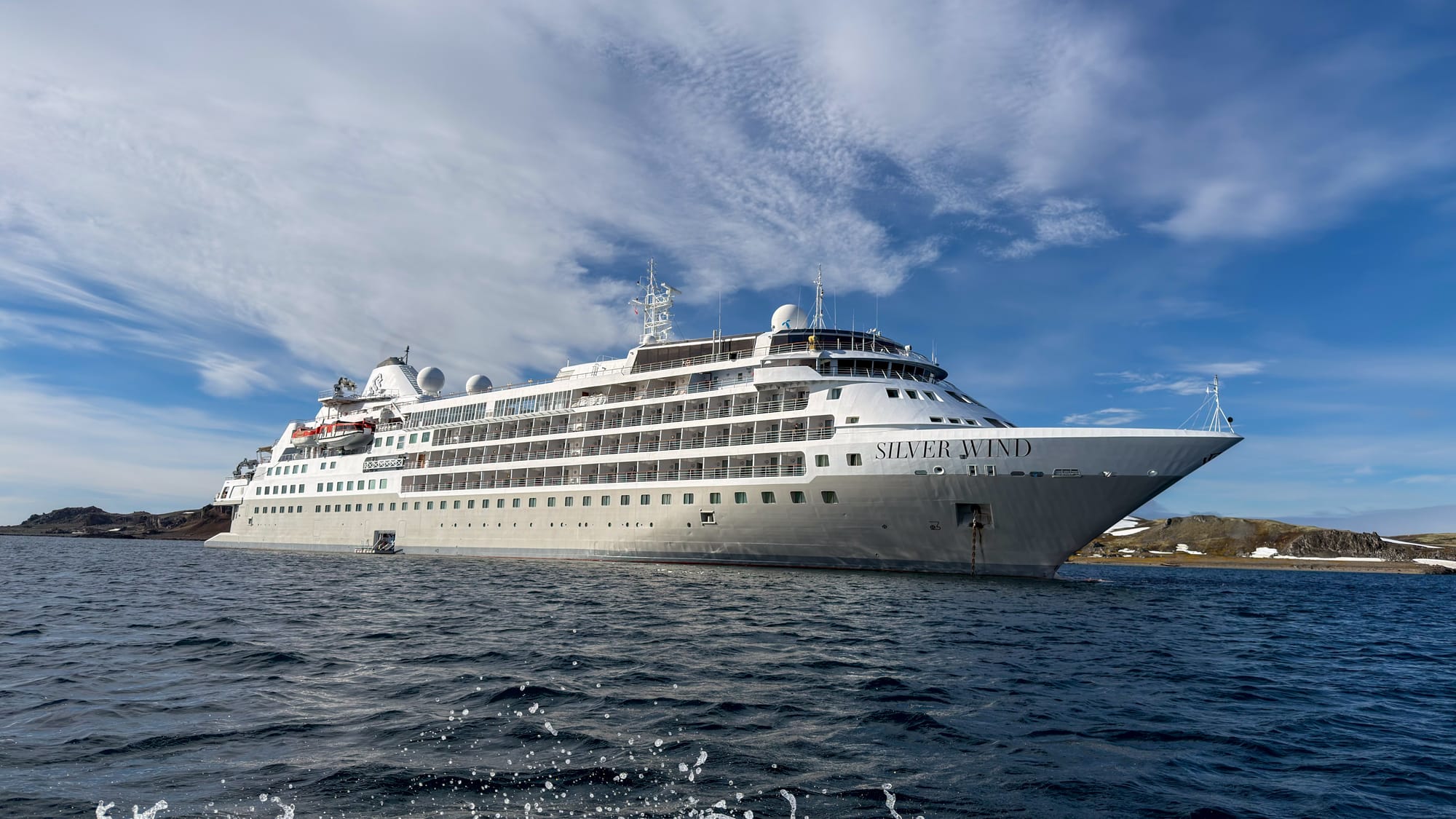
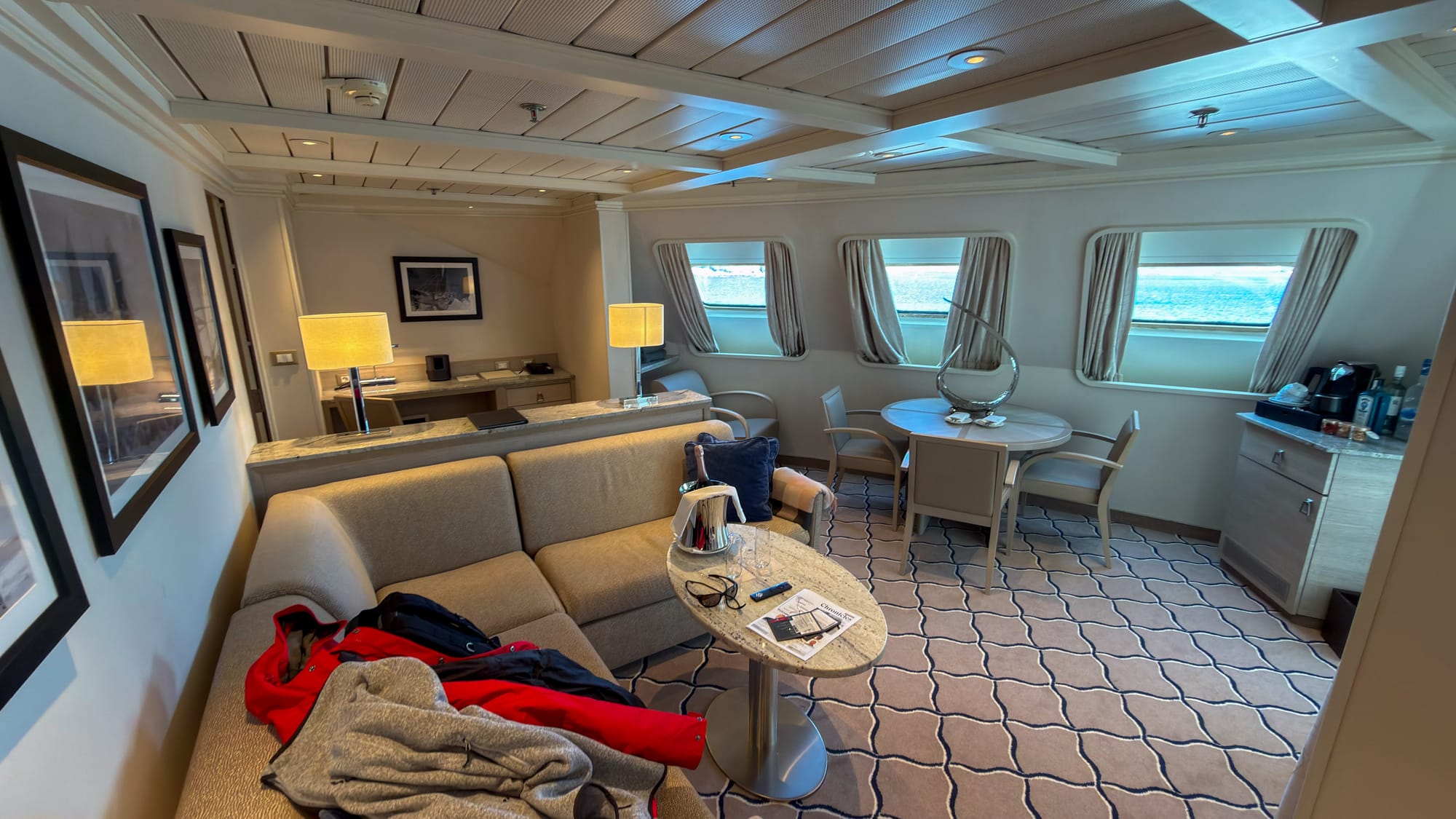
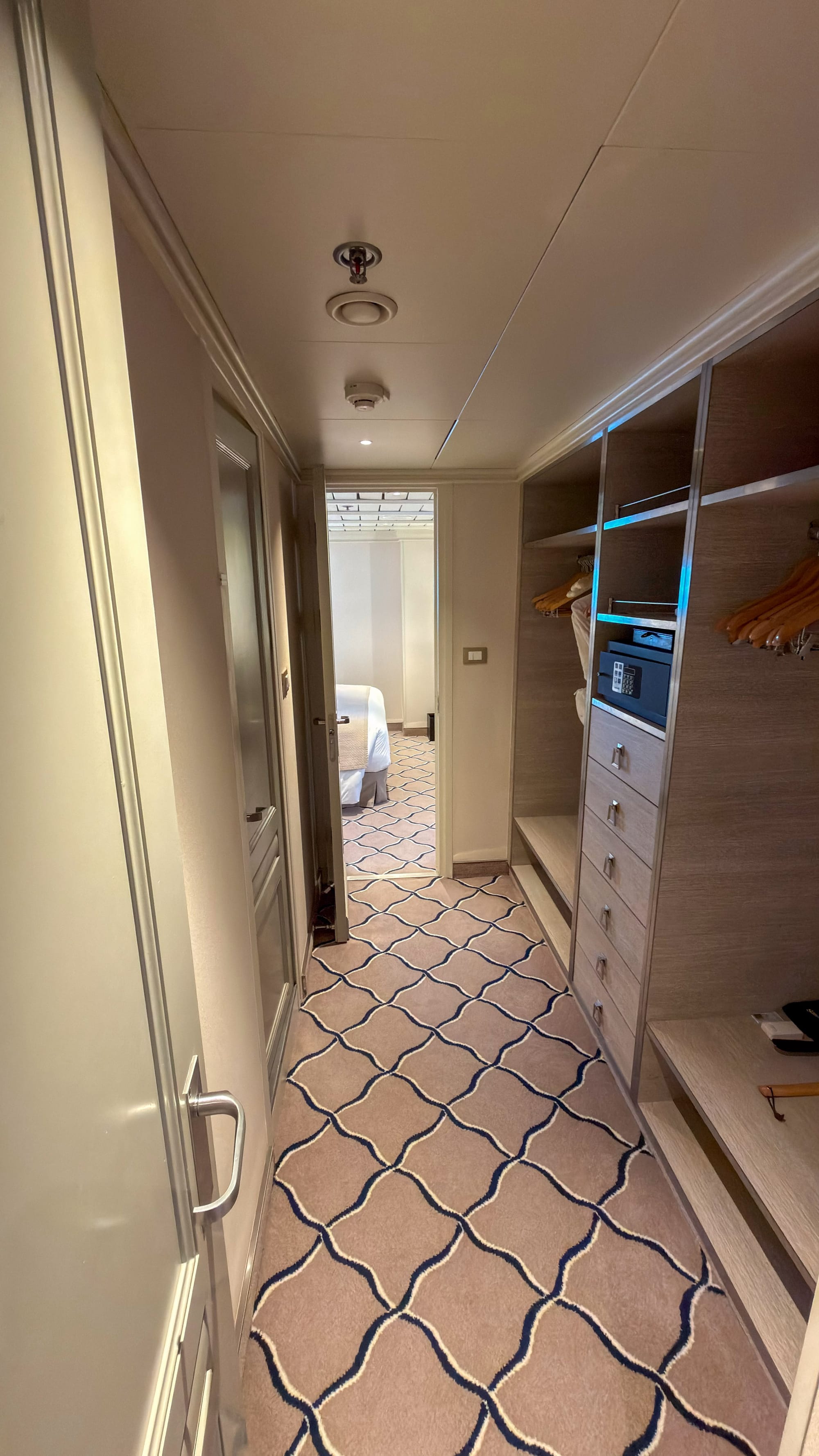
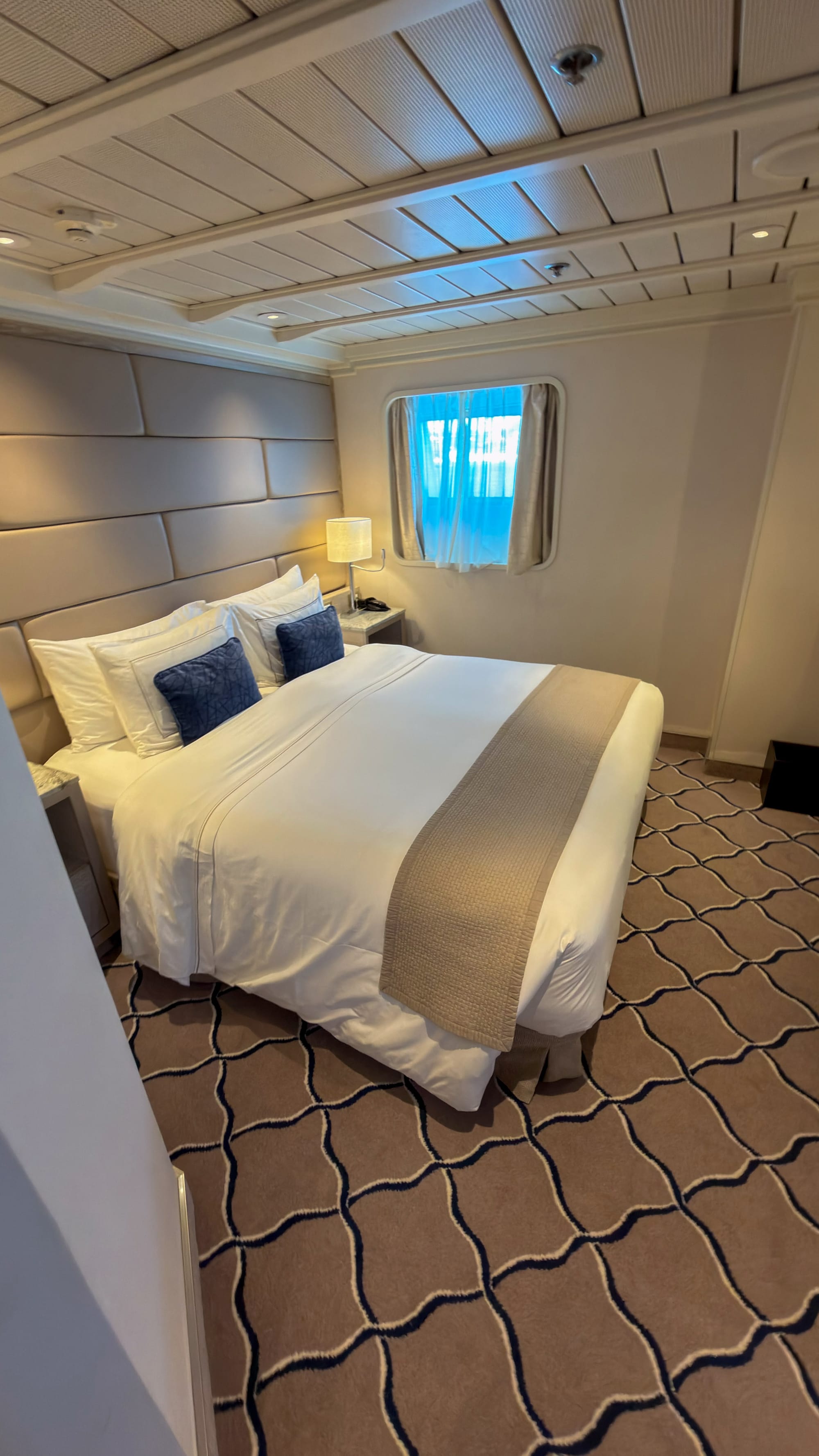
Once aboard, our butler Saroop met with us and showed us to our room. We would be staying in the Royal Suite, which is on deck 6 at the front of the ship. We had a ~200 degree panoramic view from the front of the ship.
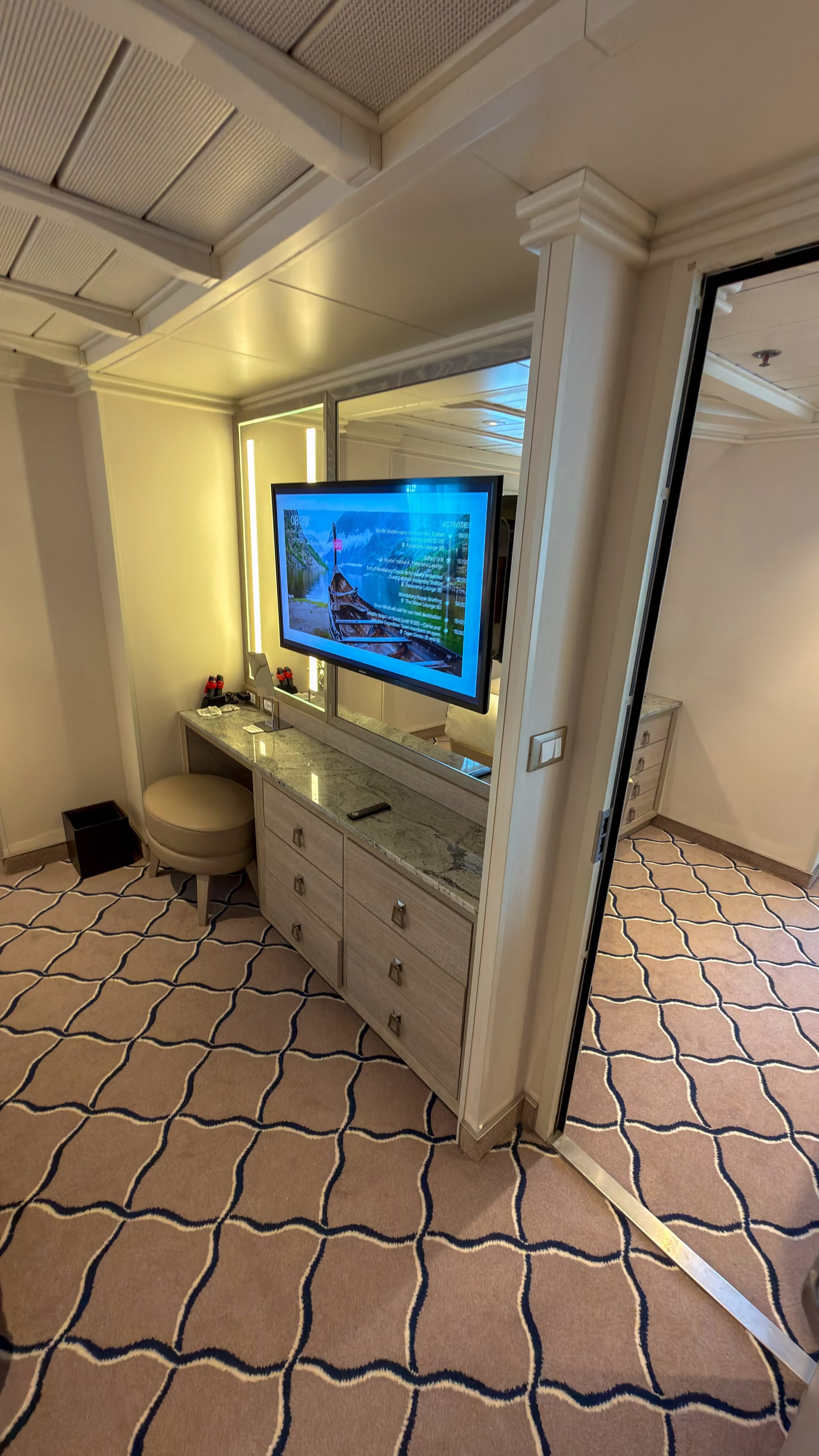
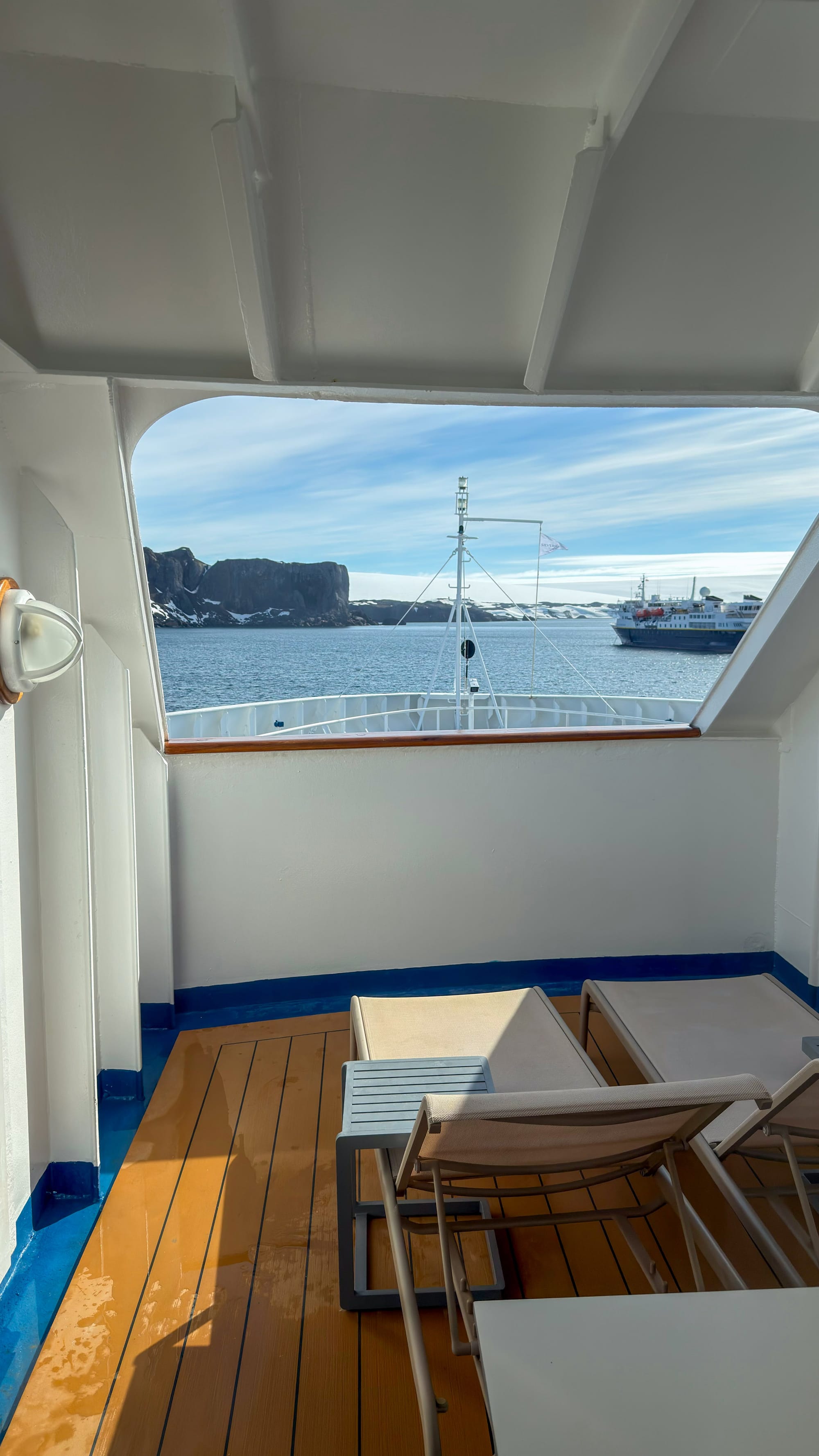
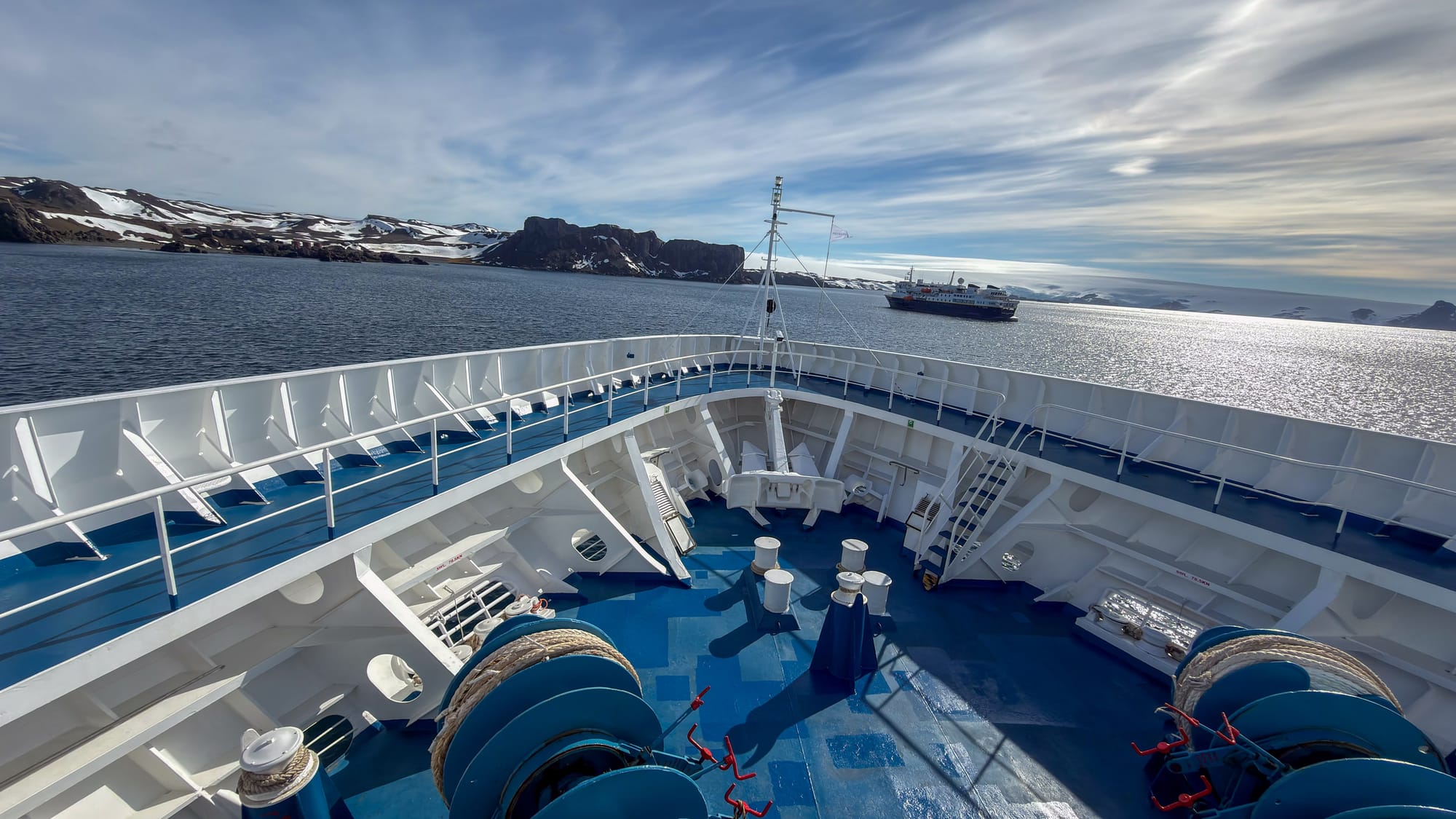
We were among the first passengers to board, which meant a couple of quiet hours waiting for the remaining guests to arrive and for all the luggage to be transferred onboard. At the time, it felt like little more than a slow start, but later in the trip we realized just how fortunate we were to have made it at all. The National Geographic ship pictured above wasn’t as lucky—its incoming flights were canceled due to bad weather, leaving it unable to depart.
Once everyone and everything was finally secured, we set off toward our first destination. Less than 20 minutes into the expedition, Antarctica wasted no time welcoming us—our first whale surfaced alongside the ship, followed shortly by penguins casually riding a tiny iceberg, as if this were the most normal commute in the world.
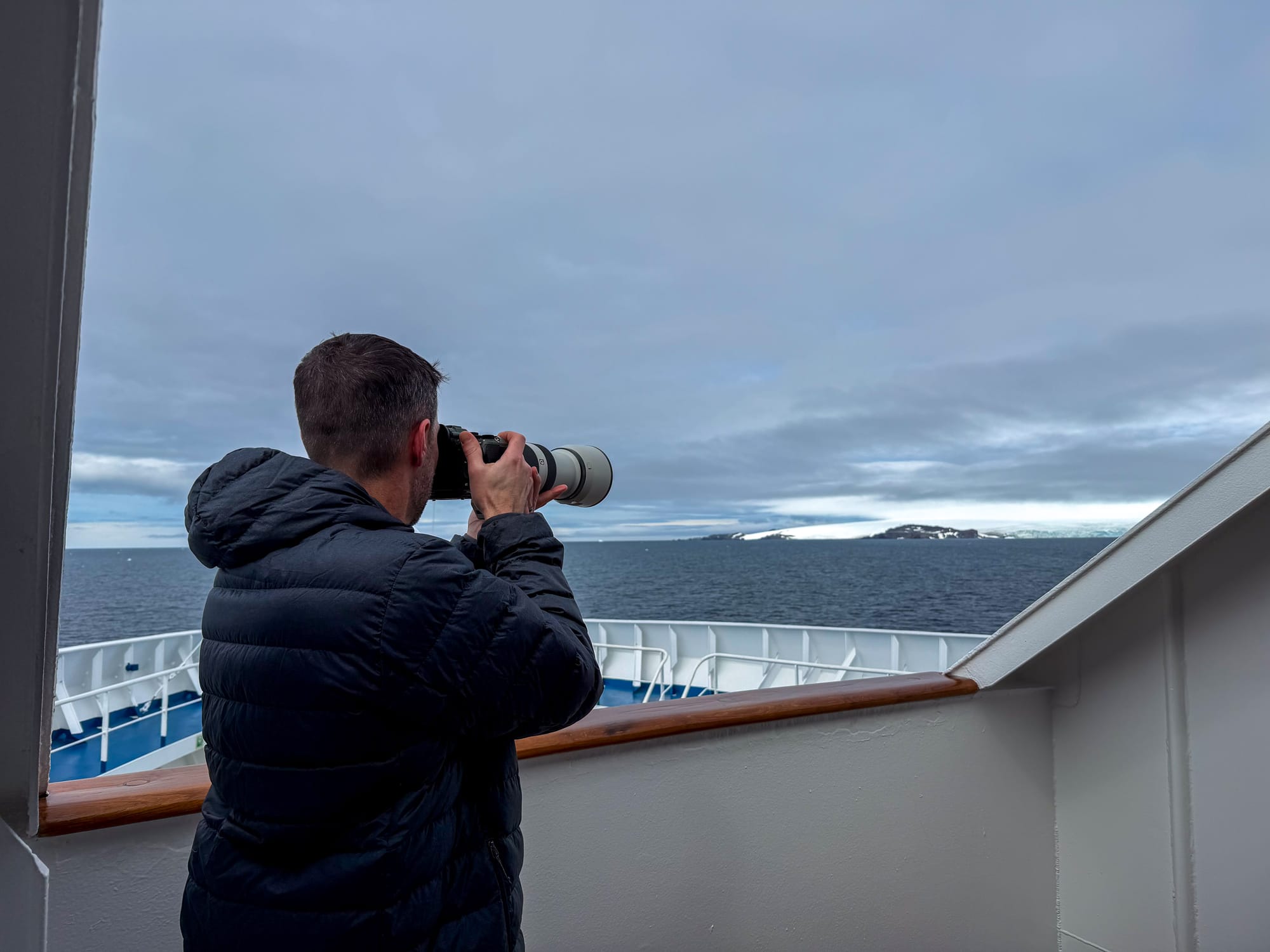
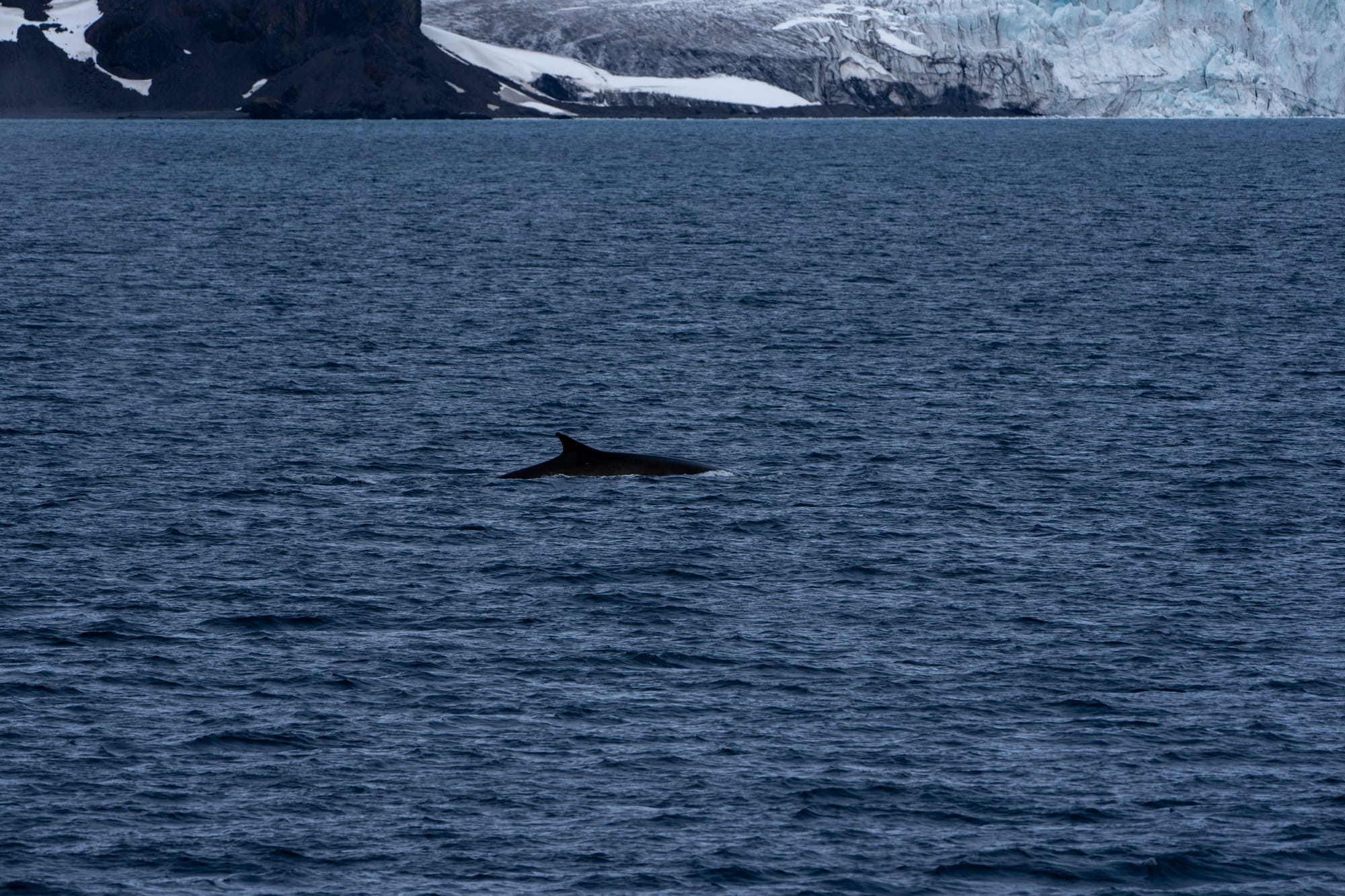
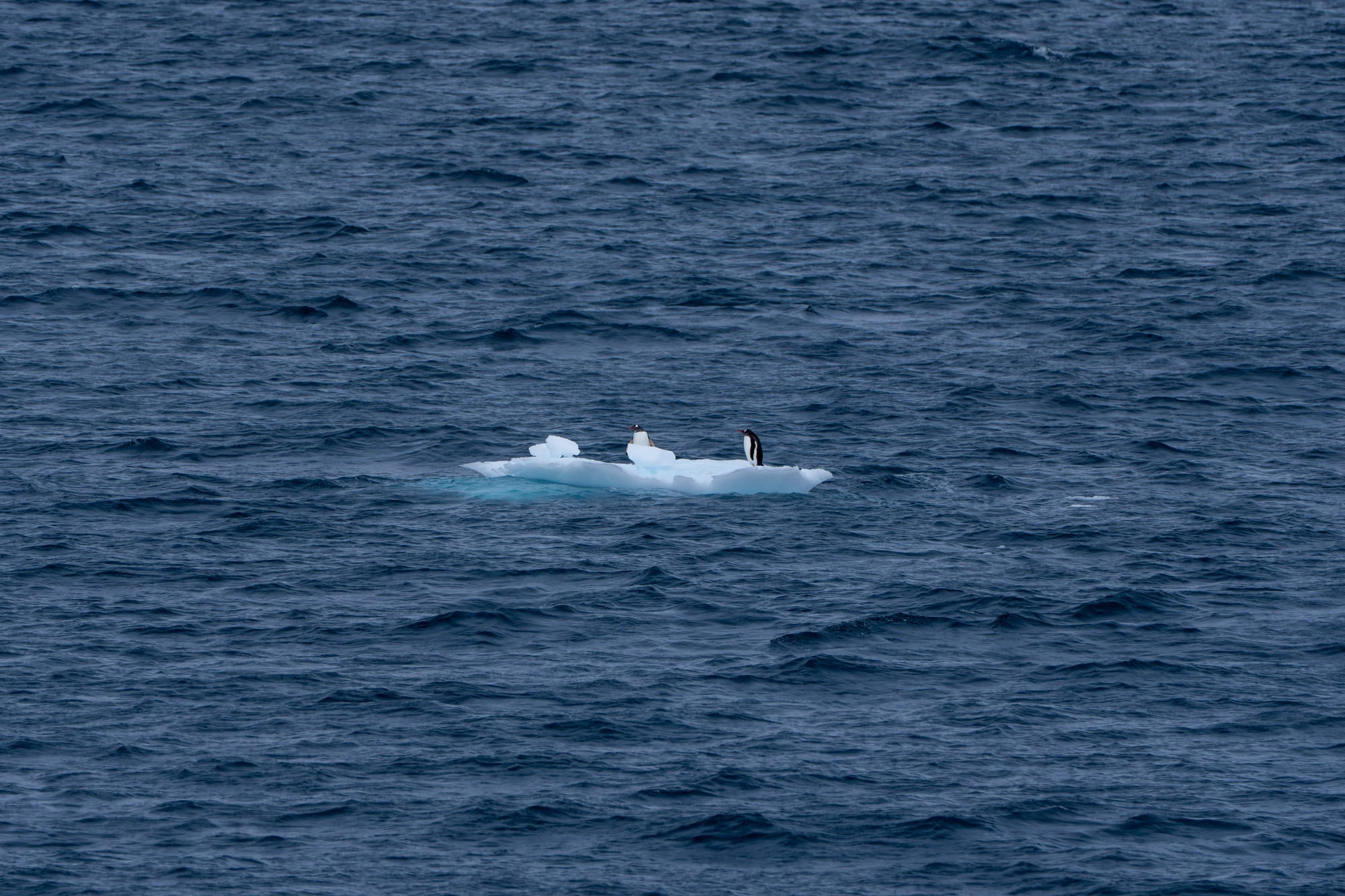
Before dinner, we were required to complete an emergency drill and report to our assigned muster stations. Once every passenger had checked in, it was time for the first of many briefings. We gathered in the Show Lounge to get our initial overview of what this voyage would hold. Our expedition leader, Werner—whose calm South African accent would become unexpectedly relevant later in the journey—introduced the team of expedition guides who would be leading us through Antarctica.
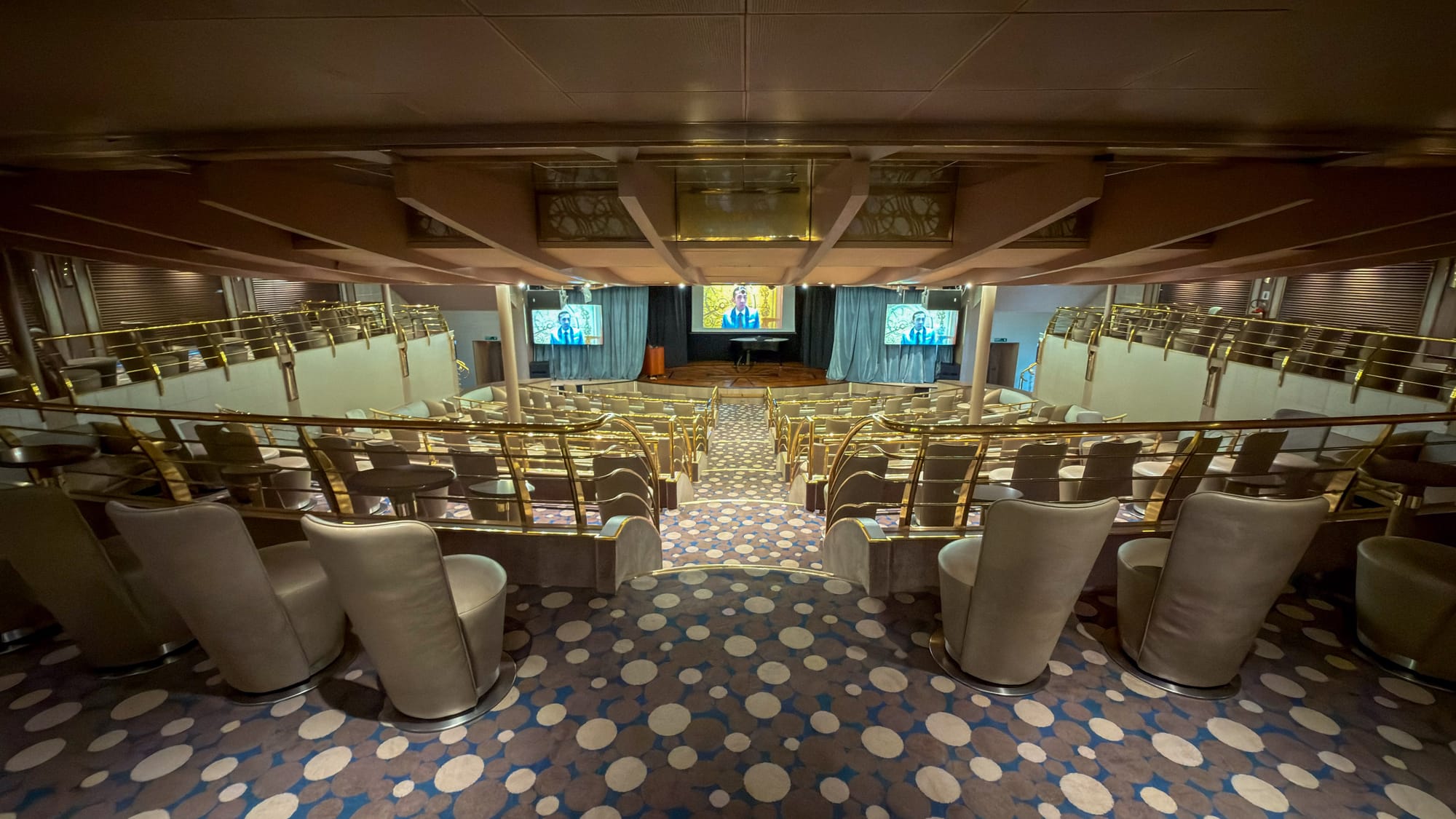
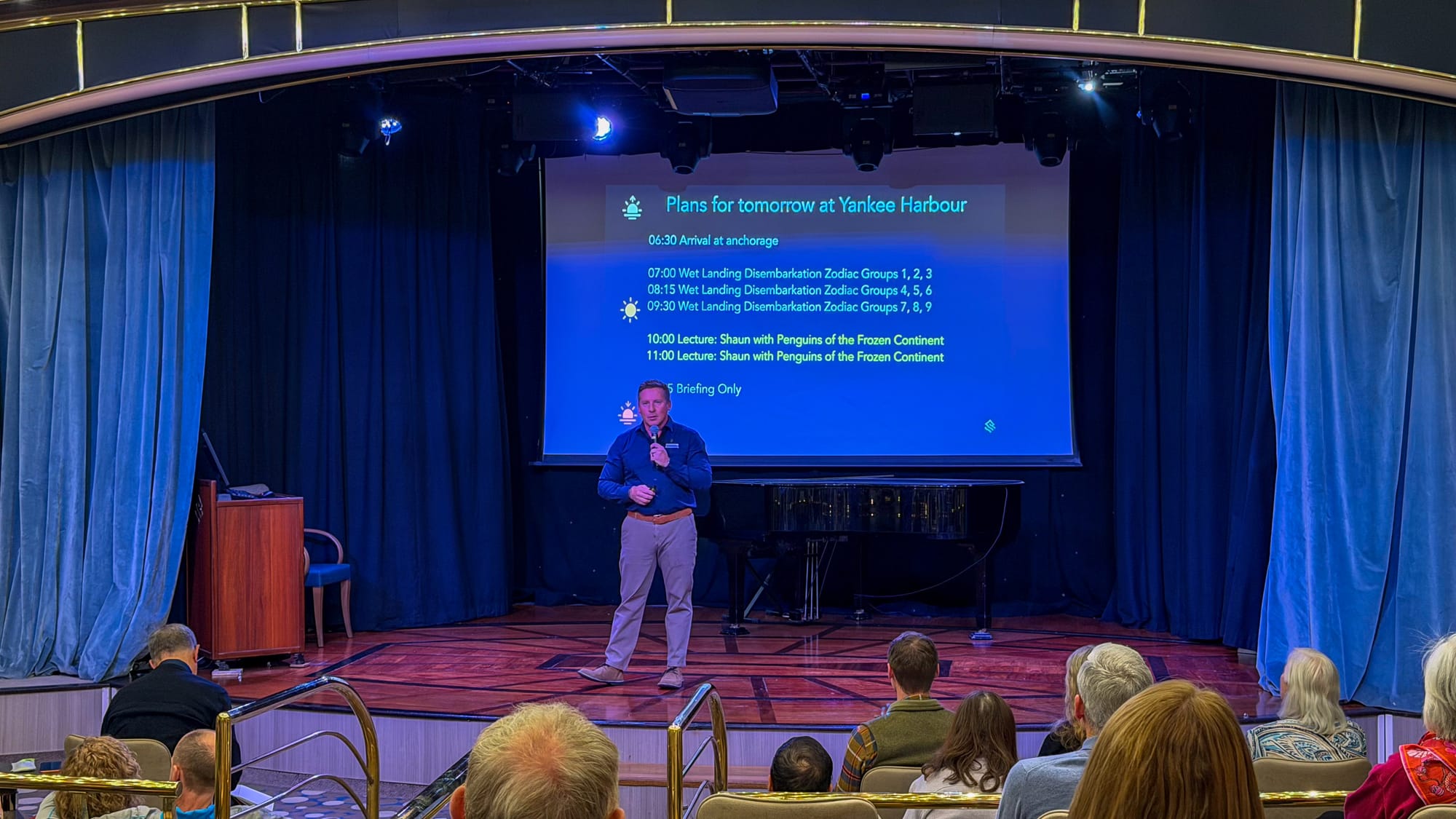
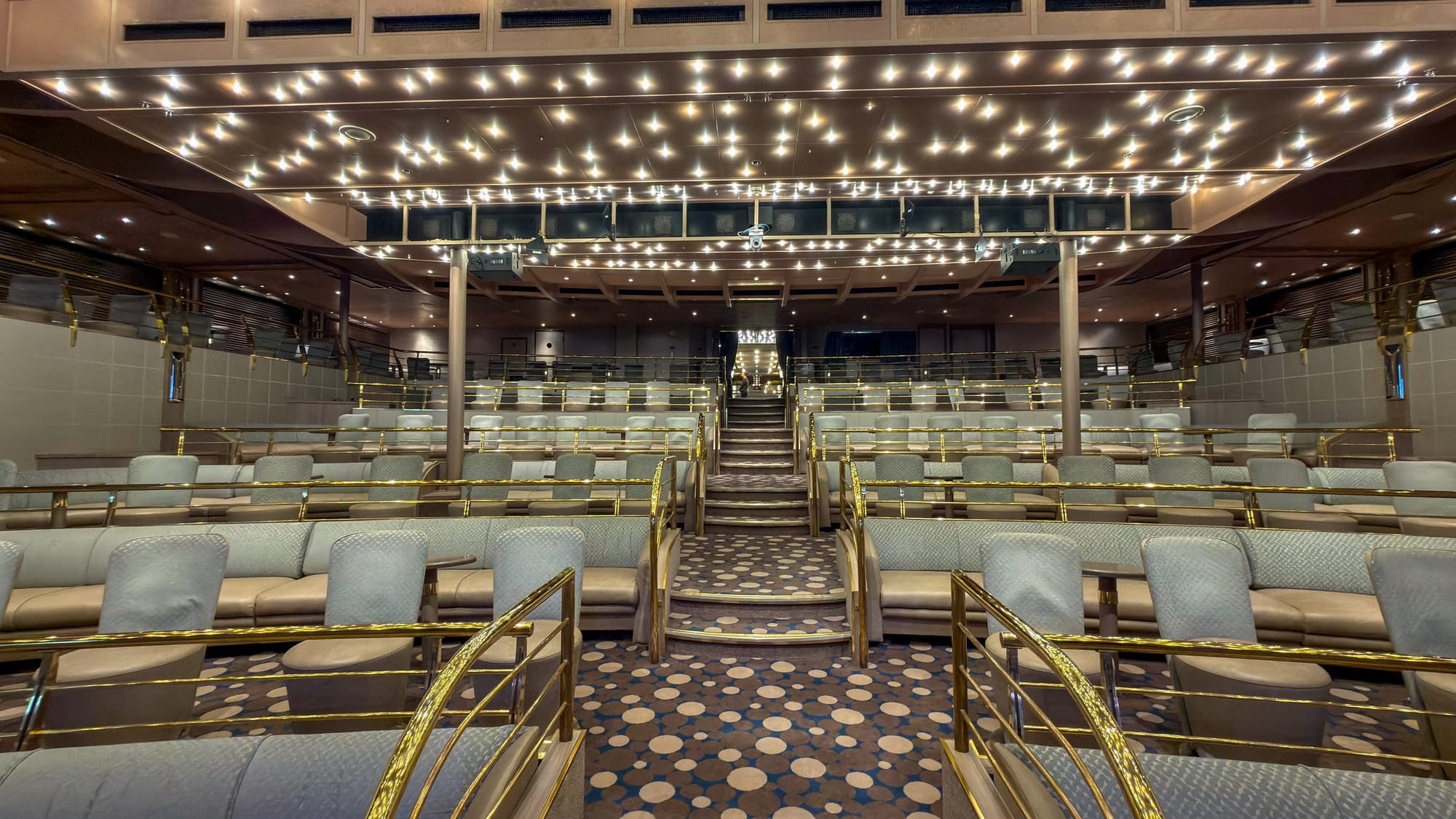
Throughout the expedition, our days followed a steady rhythm of wet landings by Zodiac and scenic Zodiac cruises through the surrounding ice and coastline. We typically had two excursions per day, scheduled at different times, carefully coordinated to comply with Antarctic regulations. With only 100 people permitted on land at any one time and the ship carrying just over 200 guests, everyone was divided into rotating groups to ensure smooth operations and minimal impact.
Each afternoon, the expedition team gathered us for a detailed briefing outlining the plan for the following day. Weather and sea conditions always had the final say, but when they cooperated, the plan was usually spot on. What follows is a breakdown of the locations we explored during the mornings and afternoons of the journey.
Jan 12th - Yankee Harbour & Half Moon
Jan 13th - Mikkelsen Harbour & Cierva Cove
Jan 14th - Skontorp & Useful Island
Jan 15th - Orne Harbour & Cuverville
Jan 16th - Whalers Bay & Baileys Head
I will document each day in a separate posting and continue to talk about the overall trip in this article.
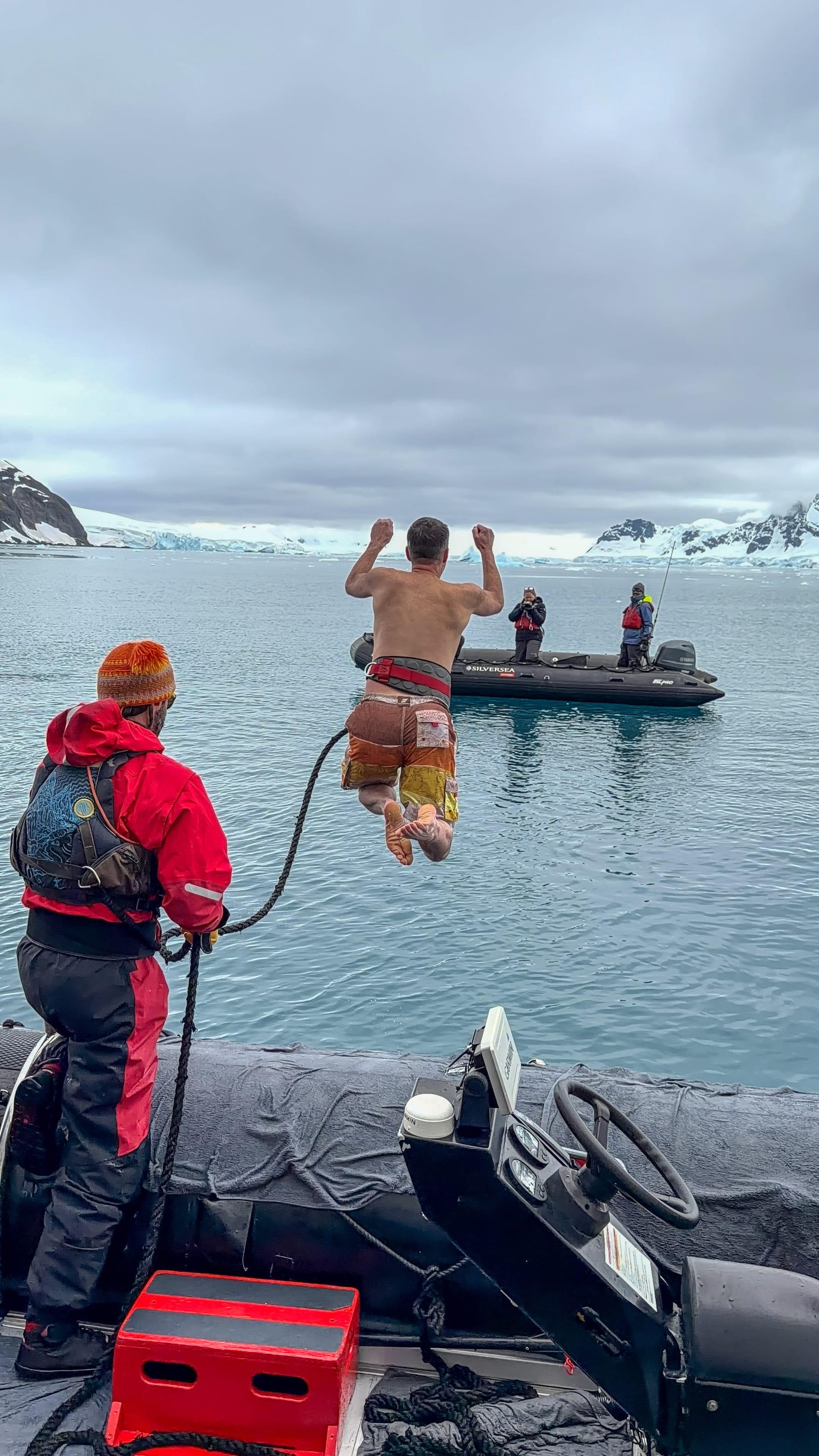
About half way through our voyage, they announced they would be doing a polar plunge. The air temperature was 30 degrees and the water was 32 degrees.
A polar plunge involves submerging in icy water (often <50∘F), causing an immediate cold shock response characterized by rapid breathing, spikes in heart rate, and blood pressure.
I knew going in that this moment might happen, so my swim trunks were already on standby. I made my way down to the Zodiac boarding area wearing my trunks, slippers and a robe, feeling slightly ridiculous and completely committed. As I stood in line, the cold began to seep in, slowly at first, then with intent. By the time I reached the open air near the ship’s exterior, my toes were numb, and the Antarctic chill had my full attention. The worst part came when they secured the safety belt—suddenly the reality of the water temperature stopped being theoretical and became very, very real.
Before jumping, I handed my phone to the crew so they could capture the moment on video. A Zodiac positioned on the opposite side was there specifically to photograph and film the plunge, turning the whole thing into a surprisingly well-documented event. Even my butler got in on it, recording the jump from Deck 8 and later handing me the footage—proof that this brief lapse in judgment actually happened.
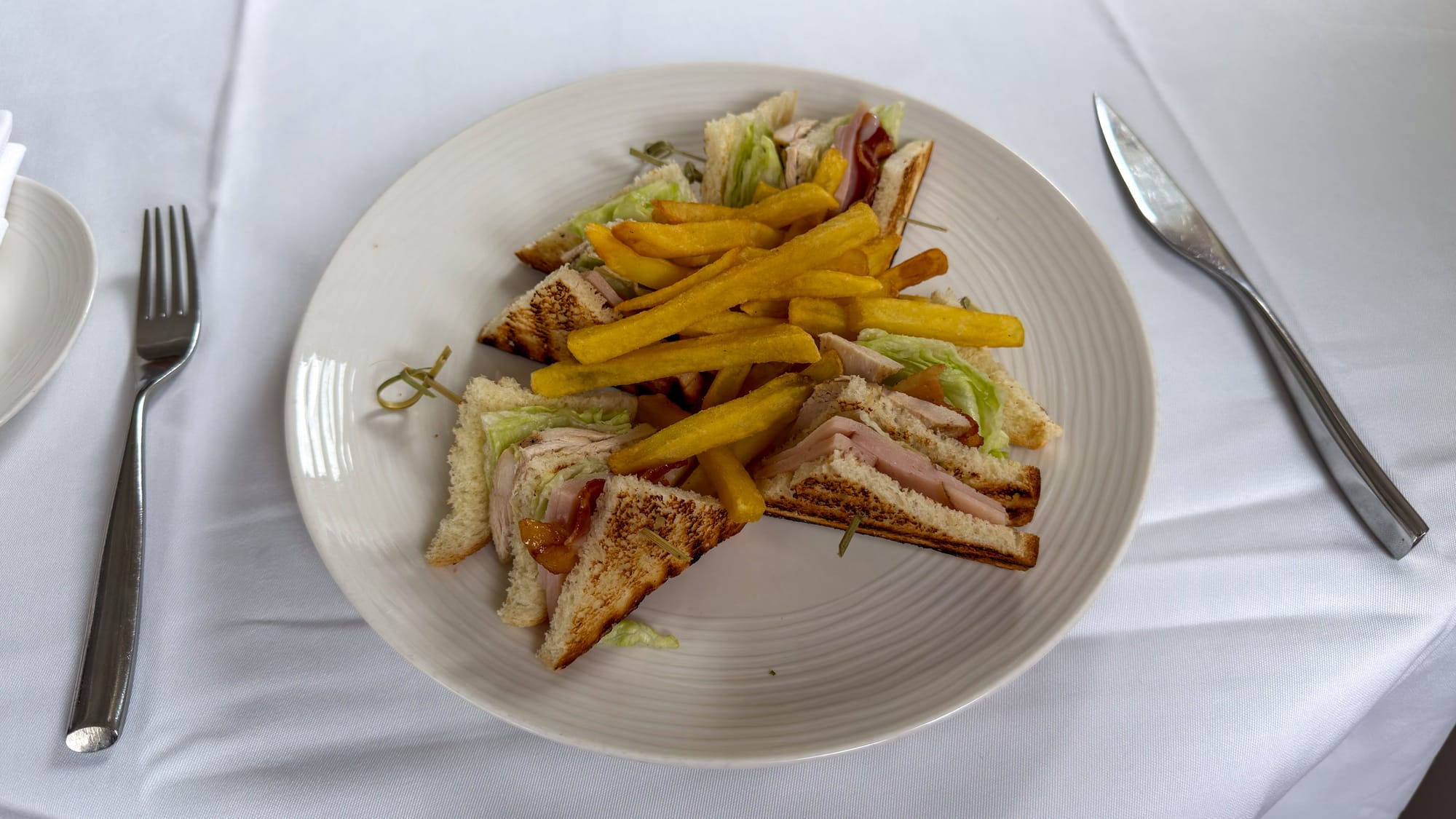
Dining aboard Silversea’s Silver Wind in Antarctica feels less like “cruise food” and more like a well-earned reward after a day on the ice. The ship offers multiple venues, with The Restaurant serving refined, globally inspired cuisine and regional dishes that lean into fresh ingredients and elegant presentation, while La Terrazza brings authentic Italian flavors—homemade pastas, risottos, and relaxed sophistication—often becoming a favorite for its warmth after cold Zodiac landings. The Grill, open for casual lunches and evening hot stone dining, is perfect for something unfussy yet satisfying, and 24-hour in-suite dining means you can review the day’s photographs over a late meal without ever leaving your cabin. It’s a slightly surreal experience: gourmet dining, fine wines, and attentive service, all while glaciers drift past the windows like they’re part of the décor.
During the voyage, we were invited to the Captain’s Dinner, a special honor extended to only about a dozen guests. The evening took place in The Restaurant, seated at a table positioned at the center of the room, setting it apart from the usual dining experience. Two other couples joined us along with Captain Sasha Kolosov, a Silversea captain from Ukraine. Over the course of the evening, he shared stories from his many years at sea, offering insight into life and leadership aboard expedition vessels. It was a rare opportunity to ask thoughtful questions about the realities of operating a ship of this size in some of the most challenging waters on Earth, and to hear those answers firsthand.
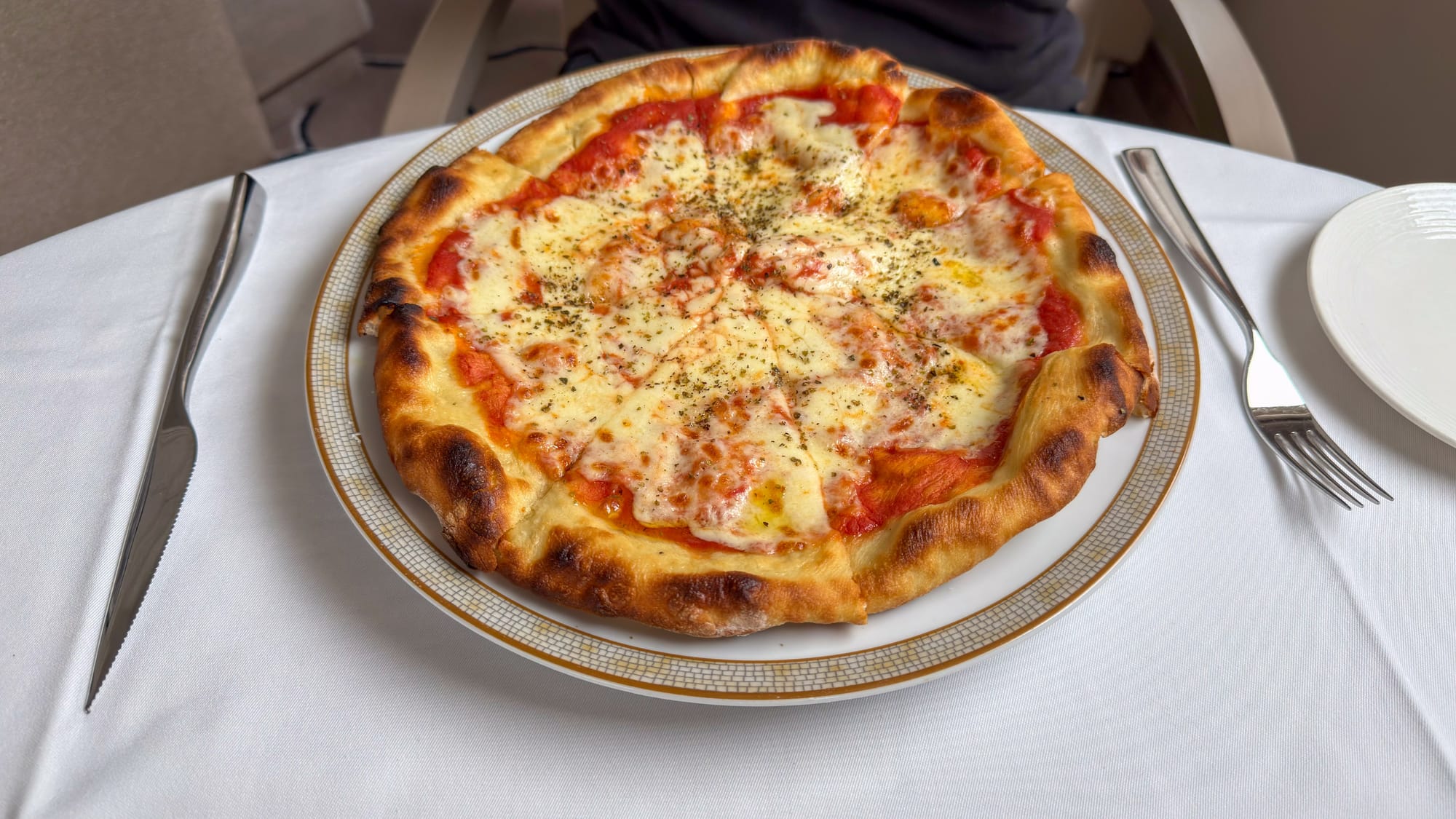
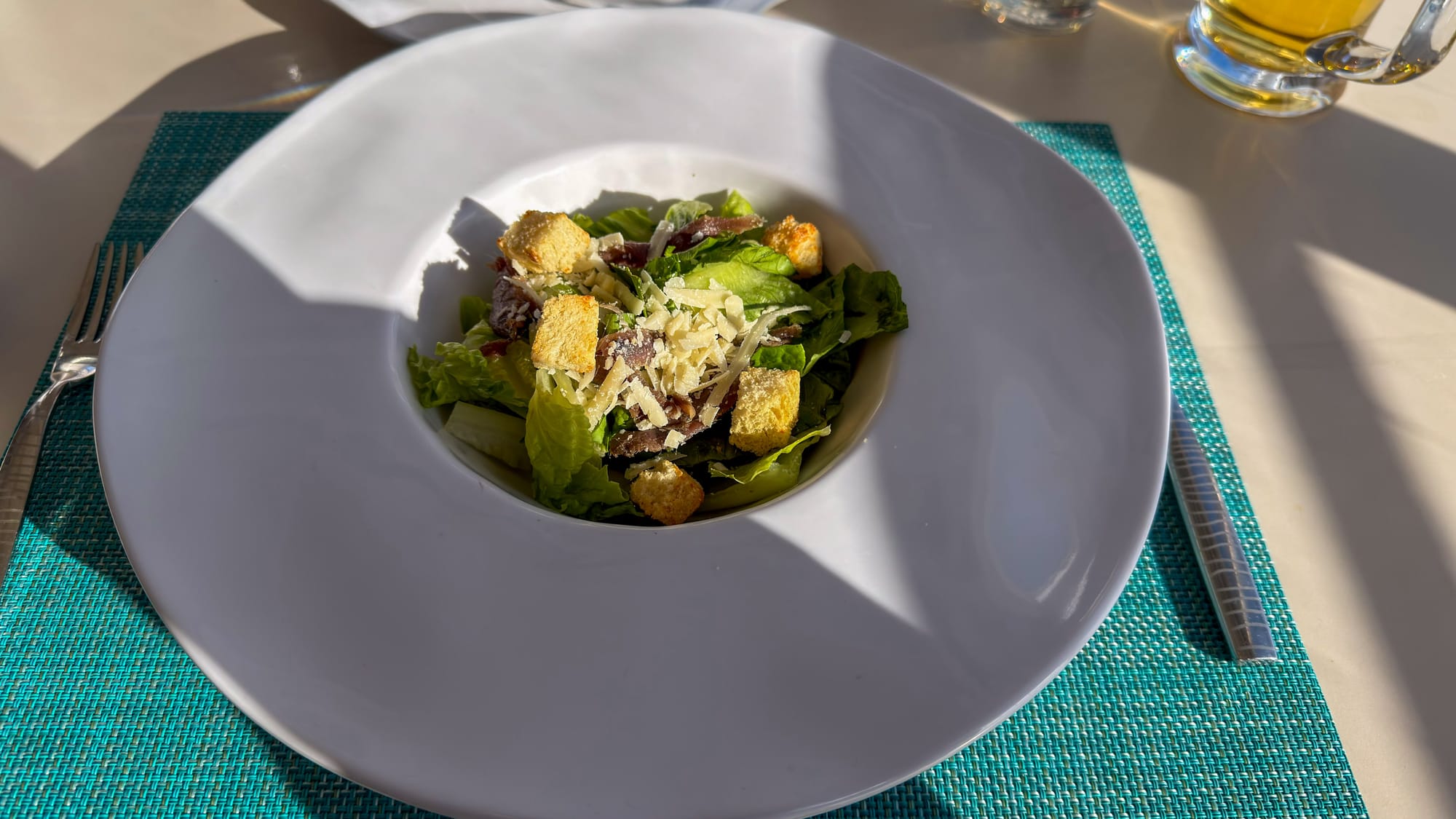
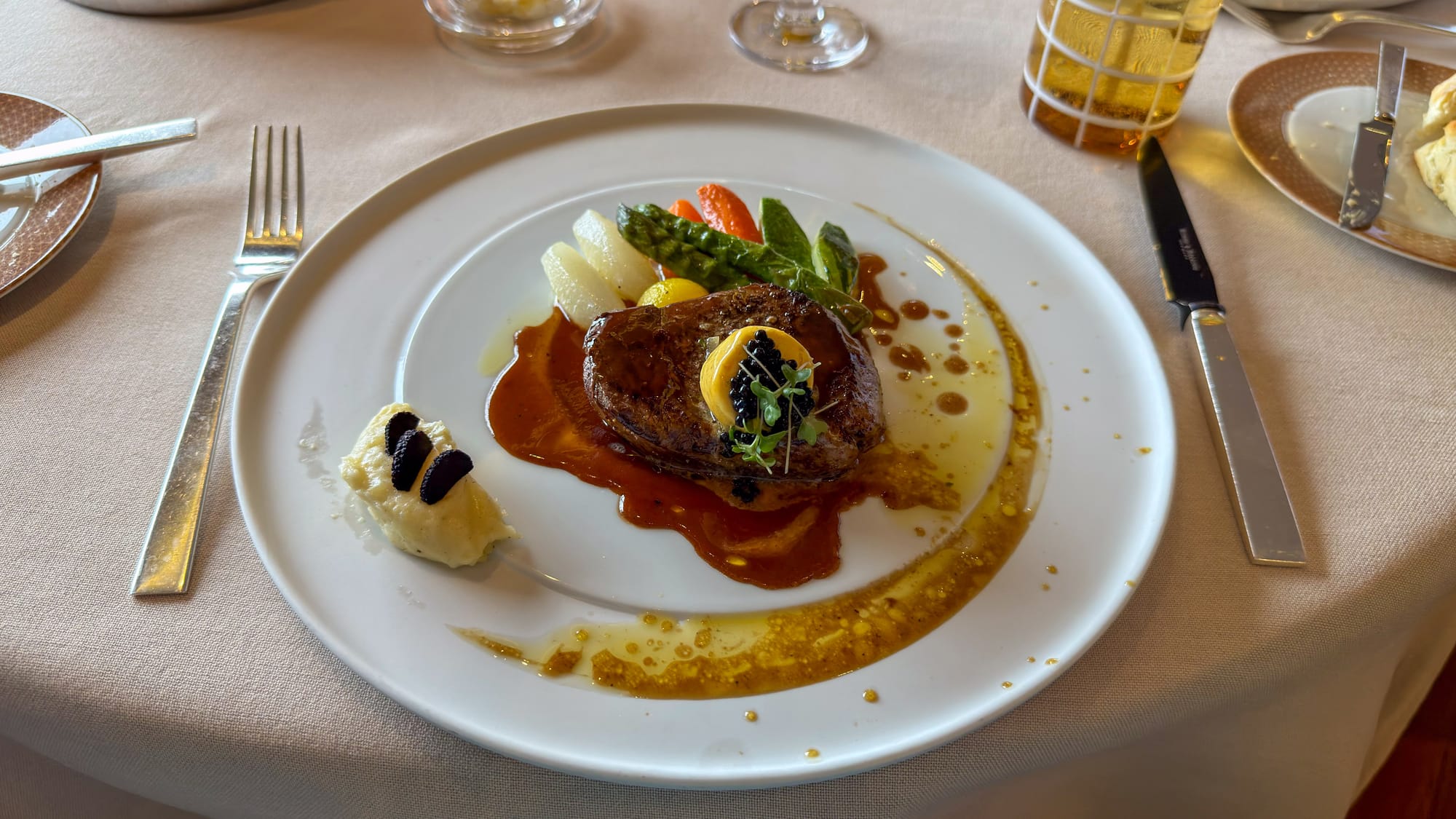
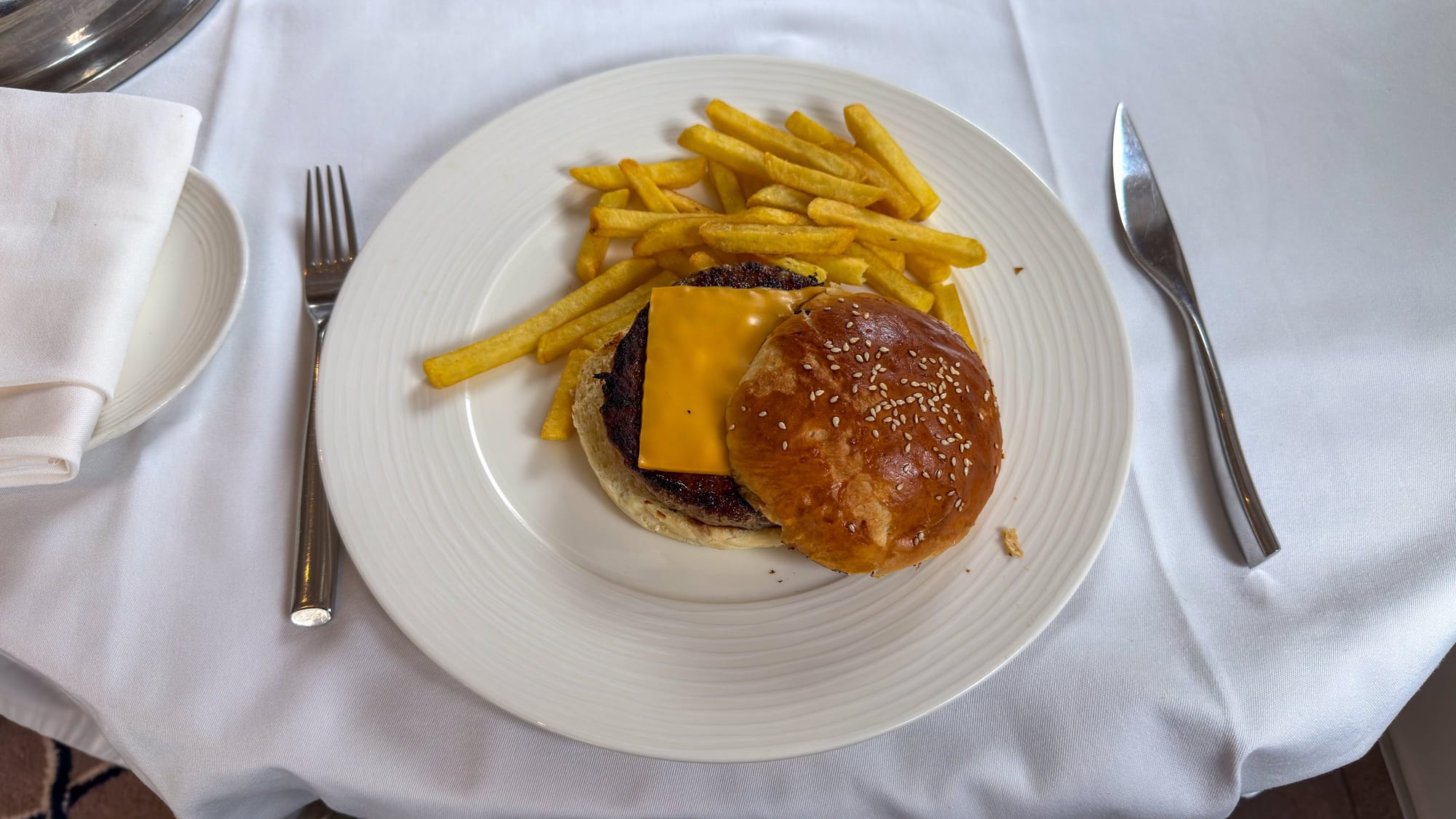
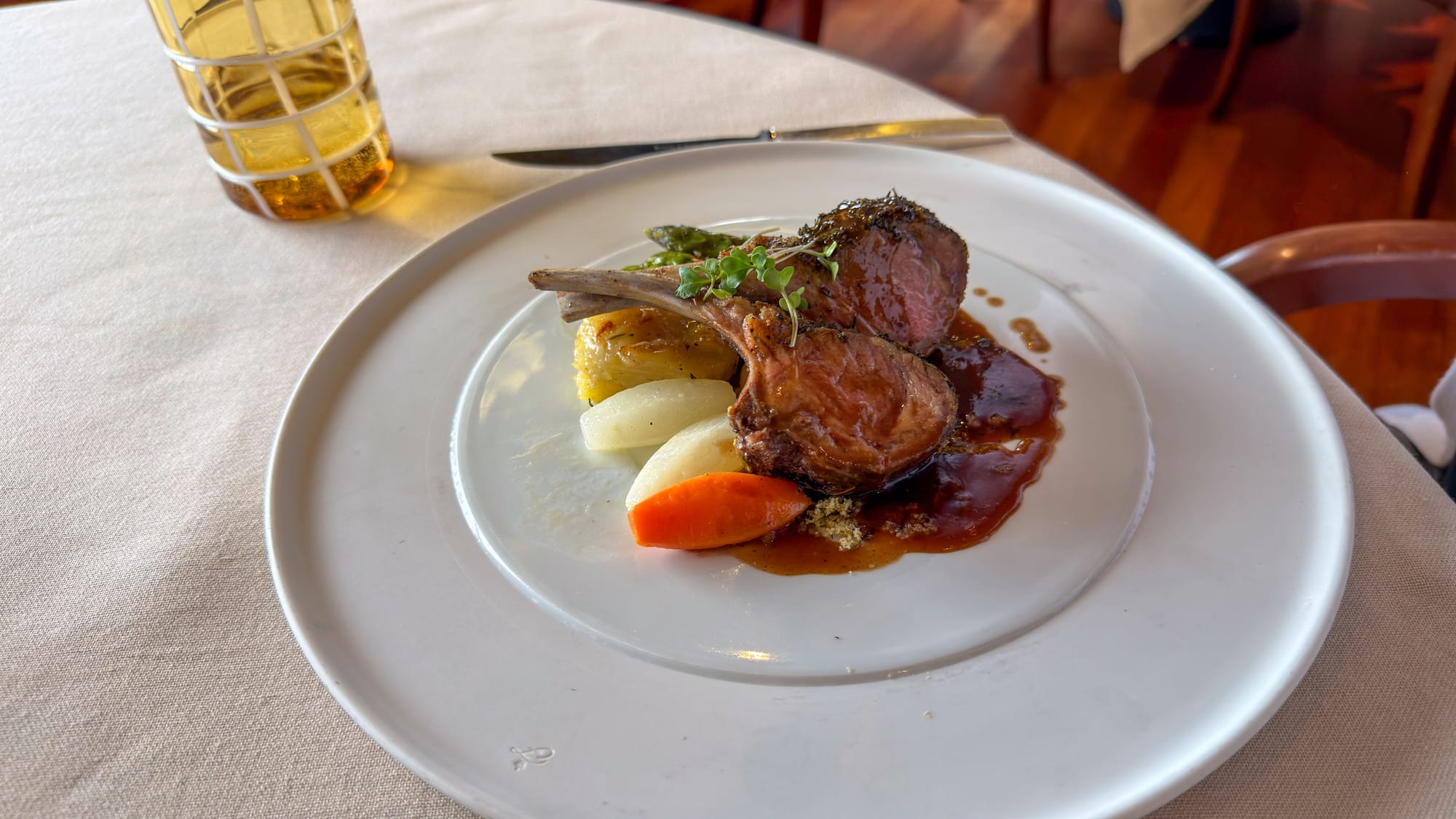
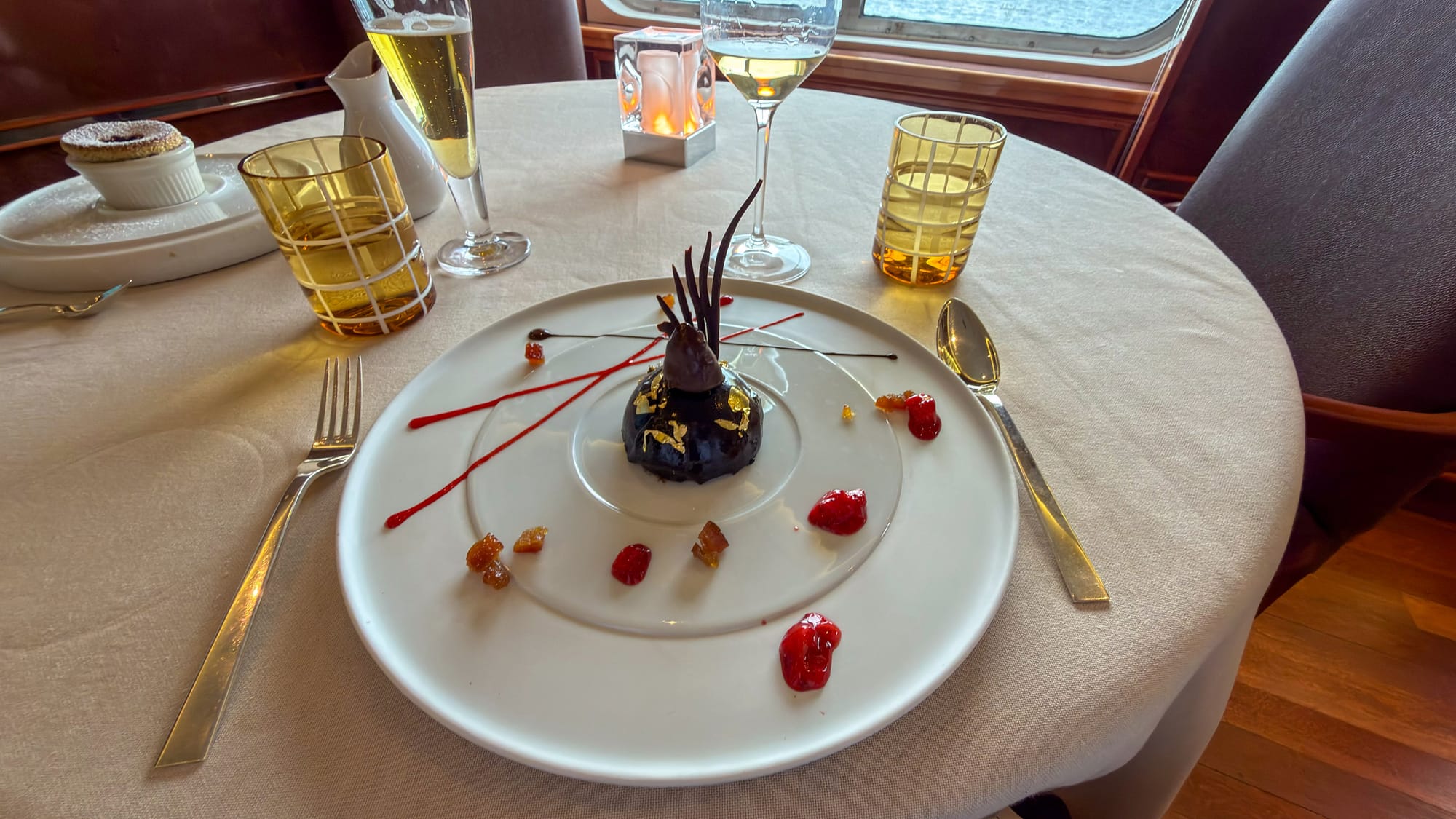
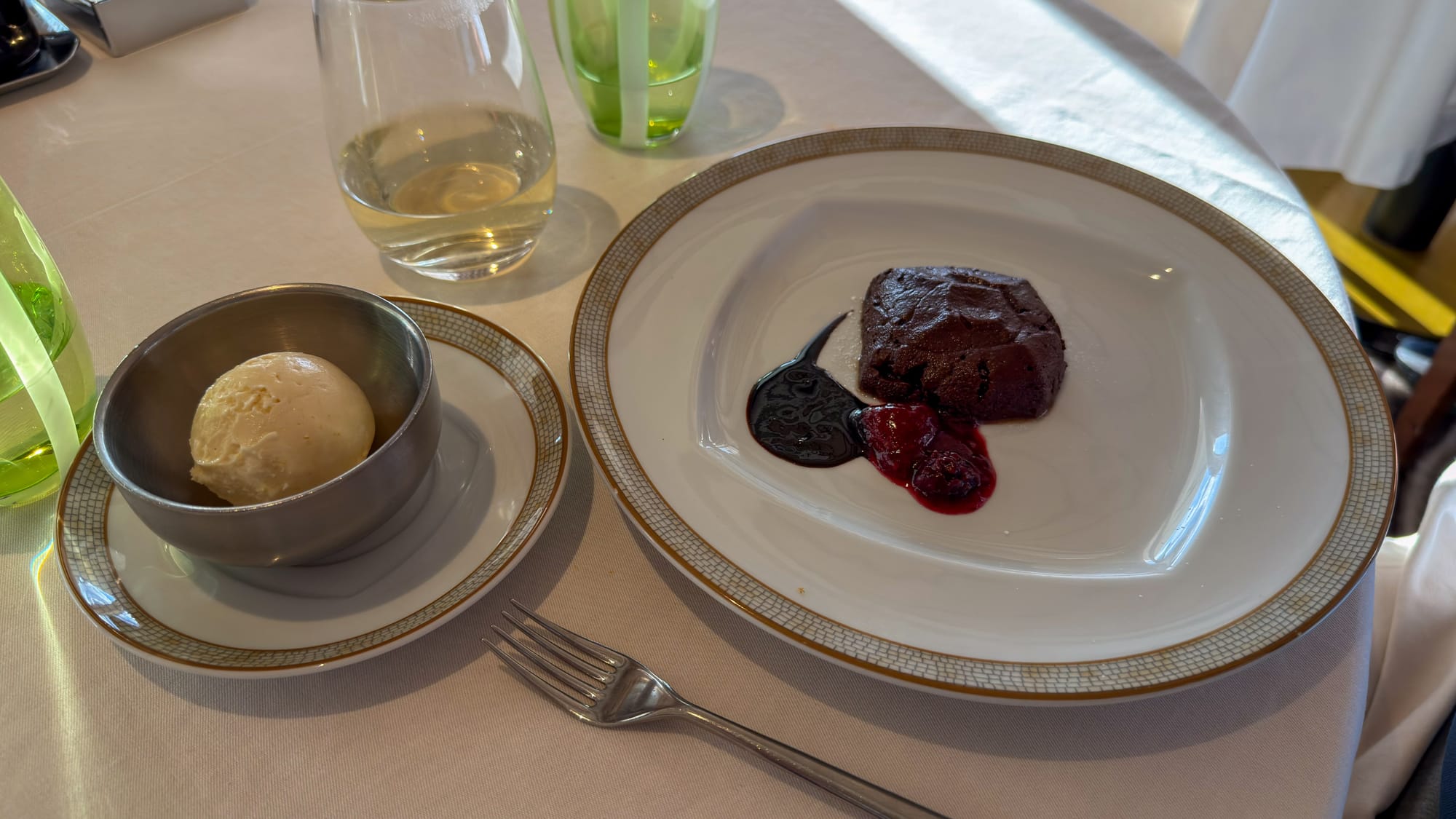
Speaking of dining, I nearly forgot to expand on Werner’s typically calm, unflappable announcements. Each morning, his voice would come over the ship’s PA, delivering the day’s conditions in a slow, steady cadence—exactly the kind of tone you want before your first cup of coffee.
So when the PA crackled to life during dinner at La Dame, the ship’s most upscale restaurant, it immediately felt off. Announcements this late in the day simply didn’t happen. Forks paused mid-air. We assumed something had gone wrong or that deteriorating weather was on the way.
Instead, it was Werner again—only this time he sounded excited and slightly out of breath.
“Ladies and gentlemen… gasp there appears to be a pod of orcas… gasp off the port side… gasp. We believe they are actively hunting… gasp. We apologize to the dinner staff for the interruption.”
Dinner, naturally, was abandoned without a second thought.
The Captain even altered course to slowly circle the ship around the pod of orcas, giving everyone extra time to take in the moment. Expedition ships typically operate on a tight schedule, but encounters like this are too rare to pass up. After two full passes, we left the animals undisturbed and continued on our way.
During our expedition, the Silver Wind cruised 482 nautical miles throughout the Antarctic Peninsula. Leaving Antarctica felt like stepping out of one world and slowly re-entering another, and the journey home made sure that transition was anything but quick. The weather turned on us and had a bit of snow in the air. We were fearful it had caught up to us and would delay our flights.
From disembarking the ship and flying north through Punta Arenas, then onward to Santiago, the sense of distance set in immediately—each airport lounge another reminder of just how far south we’d been. The long-haul flight to Houston marked the psychological halfway point, followed by the final push to Philadelphia, where familiarity finally replaced expedition mode. In total, the trip home stretched to 56 hours, a marathon of flights, layovers, and time zones that somehow felt appropriate after visiting a place so remote it resists being left easily. Antarctica doesn’t let you go without one last test of endurance.